Skip to Content

Category Archives: SMA Worldwide Ltd

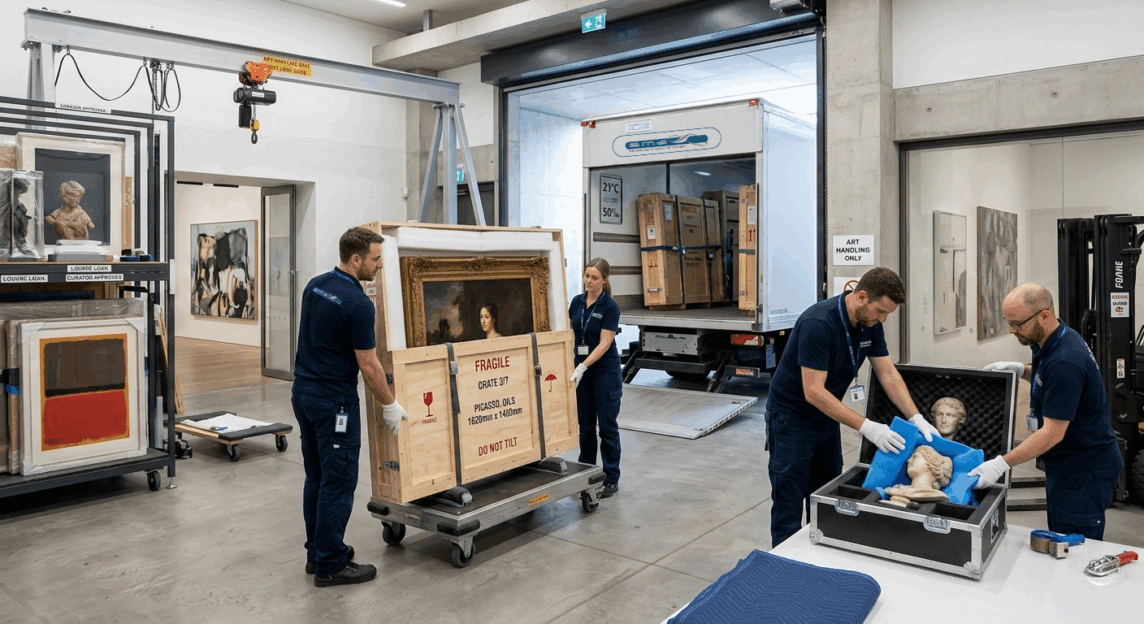
Museum Logistics for Retail Events and Campaigns

An exhibition may be ready to open, but the shop is still waiting for its merchandise. The press preview is approaching, but the printed materials have not arrived. These deliveries sit outside the movement of the collection, yet they still affect how smoothly a museum operates.

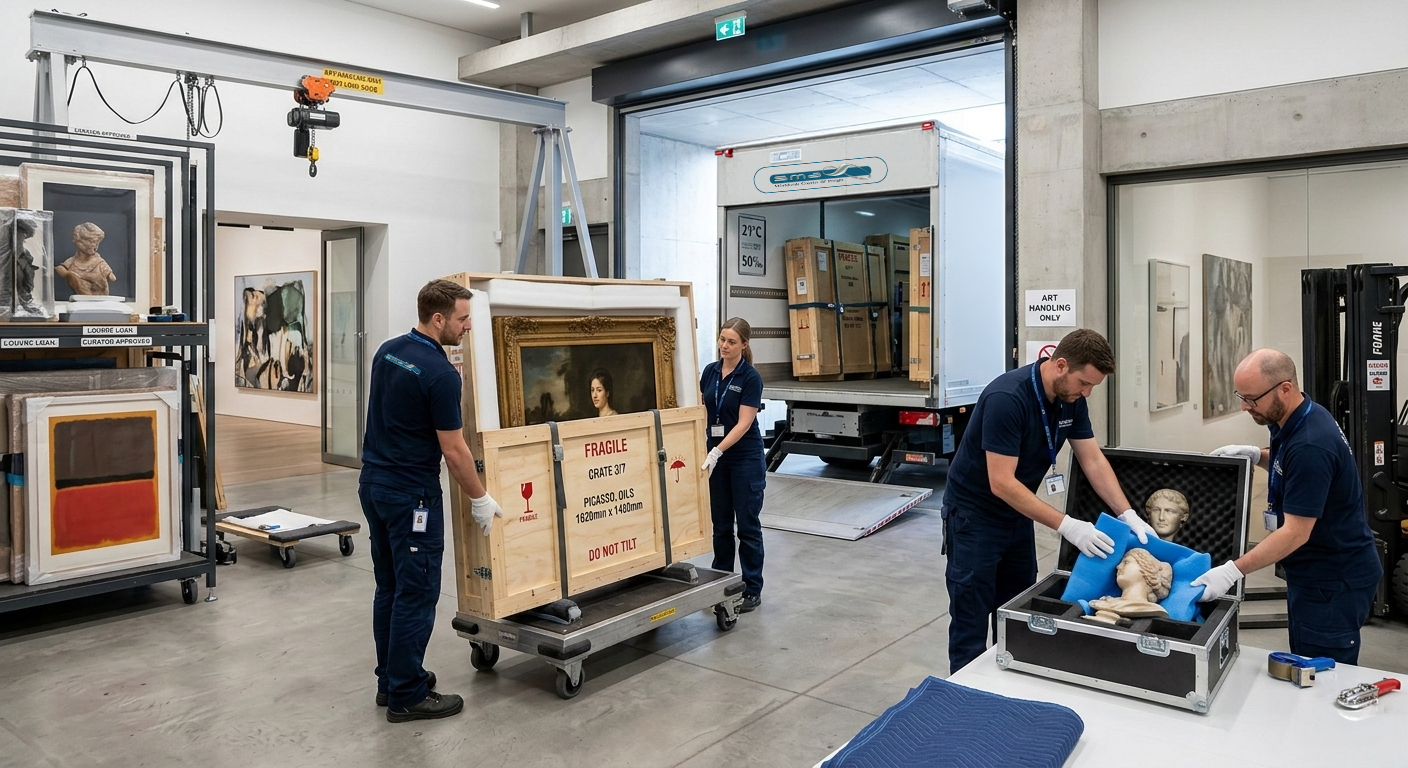
Museums and galleries can need transport for retail stock, event equipment and campaign materials alongside specialist logistics for artworks and artefacts. Planning these movements separately helps each shipment receive the right service, handling and attention.

Keeping museum shops supplied

Books, postcards, gifts and exhibition merchandise all need to reach the shop in time to be useful. When a product is linked to a particular exhibition, its delivery schedule should reflect the opening date and the period when visitors can buy it.

Retail planning starts with quantities, packaging and available storage space. A larger stock delivery may be suitable for pallet distribution, while a smaller consignment may need a parcel or courier service. Fragile merchandise still requires appropriate protection, even when it is not part of the collection.

Agree where deliveries will be received and who will accept them. Clear arrangements help avoid stock arriving at a public entrance or during a period when the receiving team is unavailable.

Preparing materials for launches and campaigns

An exhibition launch can involve printed brochures, signage, promotional packs and materials for partner venues. Each item may come from a different supplier, with its own production schedule and delivery requirements.

Work backwards from the date the materials need to be used. Allow time for receiving, checking and distributing them, rather than treating the opening day as the delivery deadline.

For campaigns across several locations, give each destination a clear allocation and contact person. Labelling consignments by venue can help teams receive the correct materials without having to sort an entire campaign shipment themselves.

Moving equipment for museum events

Talks, receptions, workshops and other events can require equipment that is hired, borrowed or stored elsewhere. The delivery plan should cover collection, arrival, unloading and the return journey after the event.

Confirm vehicle access, loading facilities and any restrictions on movement through the building. A delivery that fits the venue’s schedule gives the events team time to set up without unnecessary pressure.

Where an essential item is missing, a same day courier may be an option. Check availability and the required arrival time before booking, particularly when access is limited to a short installation window.

Planning replenishment and returns

Initial deliveries are only one part of the picture. Shops may need additional stock during a busy exhibition, and campaign materials may need to move between venues as activity changes.

At the end of an event or exhibition, agree what will be returned, stored or transferred elsewhere. Record the quantities and condition of goods, and arrange collections around the team’s packing schedule.

A clear plan for replenishment and returns helps prevent urgent decisions being left until stock is needed or a space must be cleared.

Giving artworks and collections their own transport plan

An original artwork, a loaned artefact and a box of shop merchandise should each be assessed according to their own requirements. Sharing a destination does not mean they should share the same handling arrangements.

Collection movements may require specialist packing, condition checks, security measures, environmental controls or lender approvals. The appropriate arrangements should be agreed with the museum’s collections team and the specialist transport provider before booking.

Keep those instructions separate from routine retail and campaign deliveries. This gives curators, registrars and commercial teams a clearer view of which movements they need to oversee.

Museum logistics with SMA Worldwide

SMA Worldwide provides services including same day and next day delivery, pallet distribution, international shipping, warehousing, events and exhibition logistics, and arts and gallery logistics. The team can discuss the type of goods being moved, the destination and the delivery requirements to help identify an appropriate service.

Whether you are arranging shop replenishment, moving campaign materials or planning a specialist collection movement, start with a clear description of the consignment and the handling it needs.

Planning a museum delivery or campaign? Contact SMA Worldwide to discuss your retail stock, event materials or specialist transport requirements.

Contact SMA Worldwide

0 0 Continue Reading →

Before Your Next Import Check Your Commodity Code Duty Rate and Documentation

Your goods may be ready to leave the supplier, but is the information needed for customs ready too? An incorrect product code, an overlooked charge or missing paperwork can create problems after a shipment is already moving.

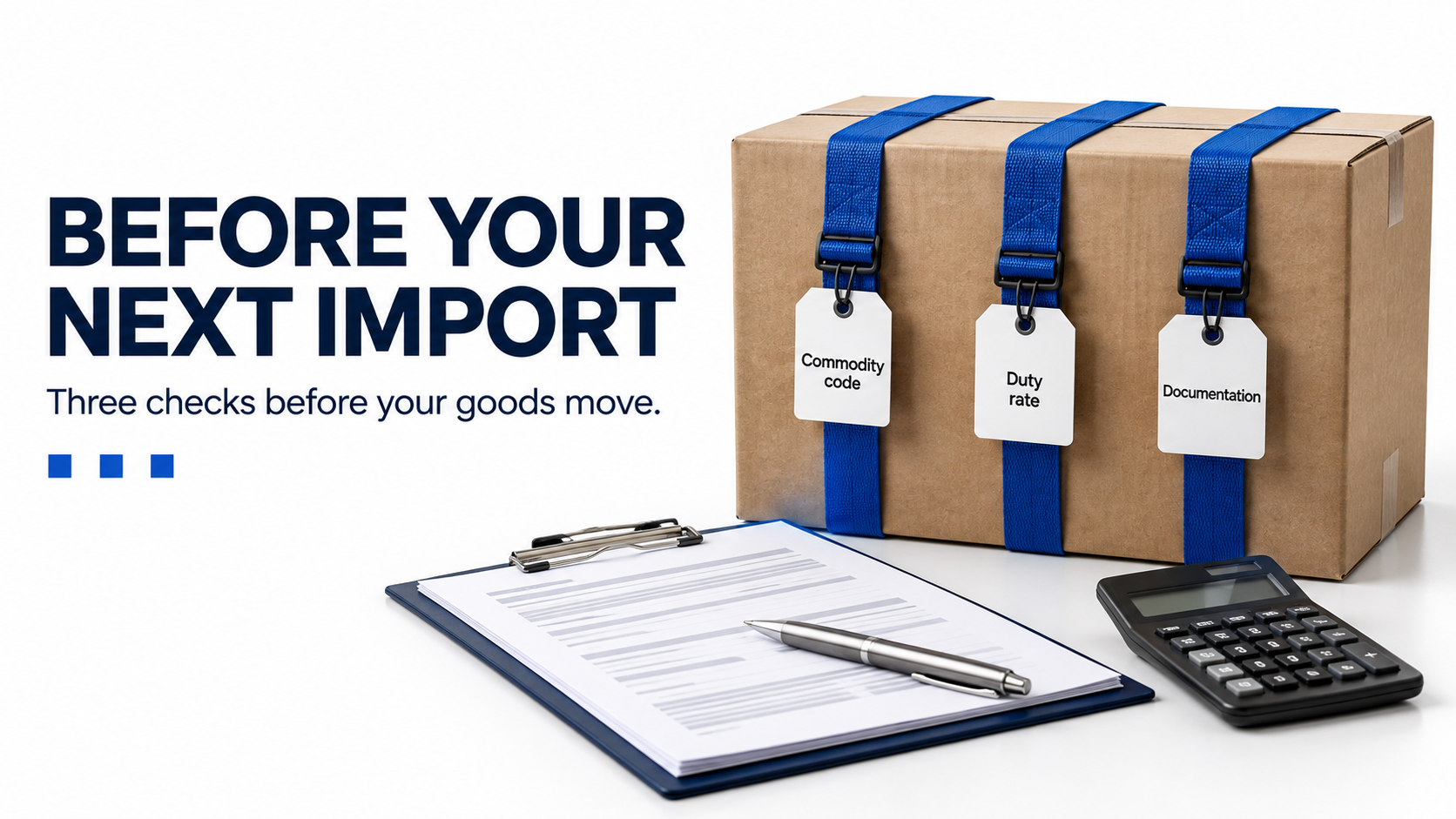
Checking three things before dispatch, your commodity code, applicable duty rate and documentation, can help you plan costs and reduce avoidable delays. This checklist focuses on business imports into Great Britain. Northern Ireland, temporary imports and certain specialist movements follow different requirements.

Check your commodity code

A commodity code identifies the goods on your customs declaration. It helps determine the duty and import VAT treatment, as well as whether licences or other measures apply.

Start with a clear description of each product, including what it is made from and how it is used. Check its classification using the UK Trade Tariff, rather than relying on a broad description such as accessories or spare parts.

If your overseas supplier provides a code, verify that it is suitable for the UK declaration. Only the first six digits are internationally harmonised, and country-specific classifications can differ.

Before dispatch, confirm the classification for each product and ask your customs agent for help where it is unclear. Keep the product specifications used to support that decision.

Check the duty rate and likely import costs

The price agreed with your supplier is only part of the import budget. Check the current tariff measures for your goods and their origin, including any additional duties that may apply.

A trade agreement may offer a lower duty rate, but eligibility depends on the relevant rules of origin and supporting evidence. The country goods are shipped from is not necessarily their country of origin.

Duty suspensions or quotas may also be available for particular goods, subject to conditions. Do not assume that a zero duty rate means no import VAT is payable.

Confirm the customs value with your customs agent. It may require adjustments to the invoice price, including relevant transport and insurance costs. Agree how duty and import VAT will be accounted for before the shipment arrives.

Prepare and check your documentation

Gather the commercial invoice, packing information and relevant transport documents early. Depending on the goods and the claim being made, licences, certificates or evidence of origin may also be needed.

Check that descriptions, quantities, values, currencies and business details are consistent across the documents. A vague invoice description or a mismatch between the paperwork and the shipment can lead to questions during clearance.

Make sure your customs agent has the information and instructions needed to complete the declaration. For business imports into Great Britain, confirm that the appropriate GB EORI number is in place. Establish who will make the declaration and who will handle any customs queries.

Your final checks before collection

  • Commodity codes have been checked for each product.
  • Duty rates, origin requirements and any relief conditions have been reviewed.
  • Customs value and the arrangements for duty and import VAT have been agreed.
  • Invoices, packing information and transport details are consistent.
  • Any required licences, certificates and origin evidence are ready.
  • Your customs agent has your EORI details and declaration instructions.

Import shipping with SMA Worldwide

SMA Worldwide offers international express imports and worldwide air and sea freight, including door-to-door freight forwarding and customs clearance services. Whether you are arranging a small consignment or a larger freight movement, discussing the shipment before dispatch helps establish the transport and clearance requirements.


Planning your next import?

Contact SMA Worldwide to discuss your goods, collection location and delivery requirements.

01923 290 490

cs@smaworldwide.com

0 0 Continue Reading →

Five Everyday Business Problems Same Day Delivery Can Solve

A missing part, stock in the wrong location or an important document left behind: small problems can quickly interrupt a working day. When tomorrow is too late, same-day delivery can help businesses keep things moving.

Its value goes beyond emergencies. Used well, it can support everyday operations, connect multiple locations and help teams respond when plans change. Here are five situations where it can make a practical difference.

Stock in the wrong location

One branch has the item a customer needs. Another has the customer waiting for it. The stock is available, but it is not where it needs to be.

A same-day transfer can move goods between branches, warehouses or offices without waiting for the next scheduled delivery. It can be useful for fulfilling an order, supporting a busy location or making better use of stock already held elsewhere in the business.

Before booking, confirm the quantity, dimensions and weight, along with the receiving location’s opening hours, so the movement can be planned properly.

A replacement part needed to get work moving again

A broken component can leave a machine idle, delay a repair or prevent a team from completing a job. Even when a replacement is available, getting it to the right place can become the next obstacle.

Same-day delivery can collect the part from a supplier and take it to the workshop, premises or site where it is needed. For engineers and maintenance teams, this can reduce time spent collecting parts themselves and help them concentrate on the work.

The key is to confirm that the correct part is ready for collection and that someone will be available to receive it.

Important documents that need to arrive today

Digital communication handles much of today’s business, but some situations still require physical documents. Original paperwork, signed agreements or documents needed for a meeting may have to reach a specific person within a limited window.

A same-day courier can move that paperwork between offices or directly to the recipient. Where timing is particularly important, a dedicated delivery can take the consignment straight from collection to its destination.

Clear recipient details and any reception or access instructions help avoid an unnecessary delay at the final stage.

Equipment left behind when a team is already on site

The team has arrived, the job is ready to start, and an essential tool or piece of equipment is still at the office. Sending someone back can disrupt the schedule and take them away from the task.

Same-day delivery can bring the missing equipment to the team, whether they are preparing an event, carrying out an installation or attending a client appointment.

Choosing the right vehicle matters. A small item and a bulky piece of equipment have different transport requirements, so provide accurate measurements and explain any loading or unloading arrangements when booking.

Supplies running low before the next delivery

A busy day or an unexpected order can use up supplies faster than planned. Packaging, materials or other essential items may run low while the next scheduled delivery is still some time away.

Same-day replenishment can help bridge that gap by moving available supplies from a supplier or another business location. It gives teams another option when demand changes and waiting could interrupt their work.

Check that the goods are ready and that the destination can accept them within the required timeframe before arranging collection.

Same Day Delivery with SMA Worldwide

SMA Worldwide offers same-day collection and delivery across the UK, with vehicle options for consignments ranging from documents and small parcels to larger loads. Its dedicated vehicle service carries your consignment directly from collection to delivery, without other consignments being delivered along the way.

For most same-day movements in Central London, the standard collection time is within one hour, although larger vehicles may take longer. Collection times outside Central London are agreed with your account manager. Account customers also have access to online booking and tracking, with automated proof-of-delivery emails.

Whether you need to transfer stock, collect a replacement part or get forgotten equipment to your team, the right delivery arrangement starts with understanding what needs to move and when it needs to arrive.


Need something delivered today?

Contact SMA Worldwide to discuss your collection, destination and delivery requirements.

01923 290 490

cs@smaworldwide.com

0 0 Continue Reading →

What Should a Great Logistics Partner Actually Do for Your Business?

Choosing a logistics partner is easy when everything goes according to plan.

The real test begins when it doesn’t.

An urgent order needs to reach a customer today. A pallet misses its expected connection. An international shipment requires additional documentation. Stock needs somewhere secure to go before the next stage of its journey. Or your business suddenly grows and the logistics operation that worked six months ago can no longer keep up.

This is where the difference between a transport provider and a genuine logistics partner becomes clear.

A great logistics partner does more than move goods from A to B. It helps keep your business moving.

They understand that every shipment affects something bigger

To a courier, a shipment might simply be a collection and delivery.

To your business, it could be a customer waiting for an important order, stock needed to keep production running, equipment required for an event, or goods that must reach their destination within a specific window.

That means reliability is not simply about delivering a box.

It is about understanding what is at stake when that box does not arrive.

A strong logistics partner looks beyond the individual shipment and understands the impact transportation can have on your customers, operations and reputation.

They give you options when circumstances change

Businesses rarely have identical logistics requirements every day.

Today you might need a scheduled next day delivery. Tomorrow, something unexpected happens and you need a dedicated same day vehicle.

Next month, you might need to send goods internationally by air or sea. As the business grows, you may also need pallet distribution, storage or warehousing.

Working with different providers for every requirement can quickly become complicated.

A capable logistics partner should be able to adapt with you, providing different solutions depending on the urgency, destination, size and nature of the shipment.

The question should not be:

“Do you provide this service?”

It should be:

“What is the best way to get this where it needs to be?”

They make urgent situations feel less urgent

Every business eventually experiences the we need this there today moment.

Perhaps a customer has been let down by another supplier. A critical component is missing. Documents need to reach someone urgently. Or an unexpected operational problem has created a deadline that cannot move.

This is where a reliable same day logistics service becomes particularly valuable.

A good logistics partner responds quickly, communicates clearly and finds a practical solution rather than adding another problem to an already stressful situation.

Because when something is genuinely urgent, businesses do not need excuses.

They need answers.

They make international logistics easier to navigate

Moving goods internationally introduces another layer of complexity.

Air freight, sea freight, customs requirements, documentation, transit times and different transportation options all have to be considered.

The fastest option is not always the right one. Neither is automatically choosing the cheapest.

A good logistics partner helps businesses understand the trade-offs and select a solution based on what actually matters for that particular shipment, whether that is speed, cost, reliability or a combination of all three.

They take storage seriously

Sometimes the biggest logistics challenge is not moving goods.

It is knowing what to do with them between movements.

Secure warehousing and storage can give businesses greater flexibility over inventory, distribution and fulfilment without requiring them to maintain additional space themselves.

When warehousing and transportation work together, goods can move more efficiently through the supply chain rather than being treated as separate problems.

They know that specialist goods require specialist handling

Not every shipment belongs in a standard delivery network.

Medical products, dangerous goods, artwork, museum pieces, exhibition materials and other sensitive items can require specialist handling, documentation or transportation.

In these situations, experience matters.

The right logistics partner understands the requirements before the shipment begins and ensures the appropriate processes are in place throughout its journey.

They communicate when it matters

One of the most frustrating experiences in logistics is not necessarily a delay.

It is not knowing what is happening.

Businesses should not have to chase repeatedly for updates or discover a problem only after a customer asks where their delivery is.

Good communication creates confidence.

When circumstances change, a strong logistics partner keeps you informed, explains what is happening and focuses on the solution.

That relationship becomes particularly valuable when logistics is supporting time-sensitive or business-critical operations.

The best logistics partner becomes part of your business

Ultimately, great logistics should feel almost invisible.

Your goods move. Your customers receive their deliveries. Your stock is where it needs to be. Urgent problems are dealt with. International shipments are managed. And when something unexpected happens, you know exactly who to call.

That is when a logistics provider becomes something more valuable: a logistics partner.

At SMA Worldwide, we support businesses with same day UK and London deliveries, next day services, international air and sea freight, pallet distribution, warehousing and specialist logistics solutions.

Whether it is one urgent delivery or an ongoing logistics requirement, our approach is simple: understand what the business needs and find the right way to deliver it.

Because great logistics is not just about moving goods. It is about moving your business forward.

Need a logistics partner that can keep up with your business?

Contact us or call 01923 290490 to speak with the SMA Worldwide team.

0 0 Continue Reading →

Understanding the Difference Between Limited Quantity, Hazardous, and Non-Hazardous Goods Deliveries

Whether you’re shipping products across the UK or sending freight internationally, understanding the difference between Limited Quantity, Hazardous Goods, and Non-Hazardous Goods is essential. Different categories of goods are governed by different transport regulations, packaging requirements, and safety standards. Failing to comply with these regulations can lead to delays, fines, damaged goods, or even serious safety risks.

At SMA Worldwide, we understand that navigating shipping regulations can sometimes feel overwhelming. That’s why our experienced logistics team works with businesses across a wide range of industries to ensure every shipment is handled safely, efficiently, and in full compliance with UK and international transport regulations.

In this guide, we’ll explain the key differences between Limited Quantity, Hazardous Goods, and Non-Hazardous Goods, along with what you need to know before arranging your next shipment.

Why Classification Matters

Every shipment must be correctly classified before it enters the transport network. The classification determines:

  • How the goods must be packaged.
  • What labels and documentation are required.
  • Which transport methods can be used.
  • Whether specially trained personnel are needed.
  • Whether additional safety measures must be followed.

Incorrect classification not only creates unnecessary delays but can also put drivers, warehouse staff, customers, and the environment at risk.

For businesses that ship regularly, understanding these classifications is an important part of maintaining compliance and protecting your supply chain.

What Are Limited Quantity Goods?

Limited Quantity (often abbreviated to LQ) refers to certain hazardous goods that are transported in small enough quantities that they present a significantly lower level of risk during transport.

Because the quantity of hazardous material is limited, many of the more complex transport regulations are relaxed, making it easier and more cost-effective to move these products while still maintaining a high level of safety.

Requirements for Limited Quantity Shipments

Although the regulations are less restrictive than those for fully regulated hazardous goods, Limited Quantity shipments must still meet specific requirements.

These include:

  • Goods must be carried in small inner containers.
  • Inner containers must be packed inside strong outer boxes or shrink-wrapped trays.
  • Boxes must not exceed 30 kg gross weight.
  • Shrink-wrapped trays must not exceed 20 kg gross weight.
  • Packaging must be of good quality and capable of withstanding normal transport conditions.
  • Packages must display the correct Limited Quantity marking where required.

The maximum amount allowed in each inner container depends on the type of substance being transported and is specified in Column 7a of the Dangerous Goods List within ADR (European Agreement concerning the International Carriage of Dangerous Goods by Road).

Although Limited Quantity shipments benefit from simplified regulations, they must still be prepared correctly to ensure compliance and safety throughout the transport process.

What Are Hazardous Goods?

Hazardous Goods (also known as Dangerous Goods) are substances or materials capable of posing a risk to people, property, or the environment during transportation.

These products require strict controls throughout the shipping process. Every shipment must be correctly classified, packaged, labelled, documented, and transported according to national and international regulations.

Employees involved in preparing or handling Hazardous Goods must also receive appropriate training.

The Nine Classes of Hazardous Goods

Hazardous Goods are divided into nine internationally recognised classes:

Class 1 – Explosives

Includes explosive substances and articles such as fireworks, ammunition, and blasting agents.

Class 2 – Gases

This class is divided into three categories:

  • Class 2.1: Flammable gases (e.g. butane, propane)
  • Class 2.2: Non-flammable, non-toxic gases (e.g. nitrogen, helium, carbon dioxide, oxygen)
  • Class 2.3: Toxic gases (e.g. chlorine, phosgene)

Class 3 – Flammable Liquids

Examples include:

  • Petrol
  • Paint thinners
  • Acetone
  • Lighter fluid
  • Certain solvents

Class 4 – Flammable Solids

Including:

  • Flammable solids
  • Self-reactive substances
  • Substances liable to spontaneous combustion
  • Materials that emit flammable gases when in contact with water

Class 5 – Oxidising Substances and Organic Peroxides

These materials can intensify fires or cause combustion under certain conditions.

Class 6 – Toxic and Infectious Substances

Including poisonous chemicals and infectious biological materials requiring specialist handling.

Class 7 – Radioactive Materials

Used in sectors such as healthcare, research, and industrial applications.

Class 8 – Corrosive Substances

Examples include strong acids and alkalis capable of causing burns or damaging other materials.

Class 9 – Miscellaneous Dangerous Goods

This includes hazardous substances that do not fit into the other classes, such as lithium batteries, dry ice, environmentally hazardous substances, and certain chemicals.

Responsibilities When Shipping Hazardous Goods

If your business ships Hazardous Goods, you are legally responsible for ensuring every shipment complies with the relevant regulations.

This includes:

  • Correct classification of the goods.
  • Appropriate packaging.
  • Correct hazard labels and markings.
  • Accurate transport documentation.
  • Staff training where applicable.
  • Compliance with ADR and any additional transport regulations.

Businesses that transport Dangerous Goods on a regular basis may also be required to appoint a Dangerous Goods Safety Adviser (DGSA) to oversee compliance and ensure transport activities meet legal requirements.

Failure to comply with Hazardous Goods legislation can result in prosecution, significant financial penalties, shipment delays, and serious safety incidents.

What Are Non-Hazardous Goods?

Non-Hazardous Goods are products that do not present a significant risk to people, property, or the environment during transport.

These goods make up the vast majority of everyday commercial shipments.

Examples include:

  • Clothing and footwear
  • Furniture
  • Office supplies
  • Packaged food (where permitted)
  • Books
  • Electronics (excluding regulated batteries where applicable)
  • Homeware
  • Retail products
  • Manufacturing components

Because these items do not fall under Dangerous Goods legislation, they are generally much simpler to transport.

However, this does not mean packaging should be overlooked.

Good packaging remains essential to protect goods during transit, minimise damage, and ensure your customers receive deliveries in excellent condition.

Choosing the Right Shipping Solution

Understanding the classification of your goods helps ensure you choose the most appropriate transport solution.

At SMA Worldwide, we support businesses with a wide range of logistics services, including:

  • UK next-day parcel deliveries
  • Pallet distribution
  • International courier services
  • European road freight
  • Air freight
  • Sea freight
  • Warehousing and fulfilment
  • Customs support
  • Specialist freight solutions

Our experienced logistics professionals can help you identify the most suitable shipping option based on the nature of your goods, delivery timescales, destination, and regulatory requirements.

How SMA Worldwide Helps Businesses Ship Safely

With over two decades of experience in logistics and supply chain management, SMA Worldwide understands that every shipment is different.

Whether you’re moving standard commercial goods, Limited Quantity shipments, or require advice on Dangerous Goods regulations, our team works closely with customers to provide reliable, compliant, and cost-effective transport solutions.

We believe successful logistics isn’t simply about moving freight—it’s about reducing risk, protecting your products, and ensuring every delivery reaches its destination safely and on time.

Final Thoughts

Knowing the difference between Limited Quantity, Hazardous Goods, and Non-Hazardous Goods is essential for any business that ships products regularly.

Limited Quantity shipments allow certain hazardous materials to be transported under simplified regulations, while fully regulated Hazardous Goods require strict compliance with packaging, labelling, documentation, and handling requirements. Non-Hazardous Goods, although easier to transport, still benefit from careful packaging and professional logistics management.

If you’re ever unsure how your products should be classified, it’s always worth seeking expert advice before shipping.

At SMA Worldwide, our knowledgeable team is here to help businesses navigate the complexities of modern logistics, ensuring every shipment is handled safely, efficiently, and in accordance with current transport regulations.

Whether you’re shipping across the UK, throughout Europe, or worldwide, you can rely on SMA Worldwide to deliver your goods with confidence.

cs@smaworldwide.com

0192 329 0490

0 0 Continue Reading →

The Art of Museum and Gallery Logistics

Museums and galleries feel still when you walk through them. Quiet rooms. Controlled light. Objects that seem to belong exactly where they are meant to be. But that stillness is an illusion.

Behind every exhibition is motion. Constant planning. Careful timing. Objects crossing borders, passing through hands, being packed, unpacked, inspected, protected. What the visitor experiences as calm is actually the result of precision that rarely gets seen.

Museum logistics in the UK and across Europe is not simply transport. It is the coordination of fragile, high value and often irreplaceable cultural objects through environments that leave no room for error.

This is where SMA Worldwide operates. Not in the spotlight of the gallery floor, but in the systems that make the exhibition possible in the first place.


The journey of an artwork from storage to exhibition

Every piece in a museum has a journey, even if that journey is not visible to the public. Before an object reaches a gallery wall, it may spend months or years in storage. When it is selected for exhibition, a carefully controlled process begins.

It is removed from storage under strict handling procedures. It is assessed, documented and prepared for packing. Specialist materials are used to ensure protection during movement. Custom crates are often built to match the exact dimensions and fragility of the object.

From there, the artwork enters transit. This may involve road, air or sea transport depending on where the exhibition is taking place. Each stage requires coordination between logistics teams, curators, registrars and customs authorities.

Across the UK and Europe, museum logistics services must account for distance, regulation and environmental control. SMA Worldwide manages this process end to end, ensuring that each movement is planned with precision and handled with complete care, from collection storage to final installation.


Precision handling where there is no margin for error

Unlike standard freight, museum logistics carries emotional and cultural weight. A single mistake is not just financial loss. It can mean irreversible damage to history.

Temperature changes, vibration, humidity and light exposure all pose risks. Even small inconsistencies can affect sensitive materials such as canvas, paper, wood, textiles and sculpture.

This is why handling procedures are so strict. Every movement is intentional. Every lift is controlled. Every surface is considered.

SMA Worldwide operates with specialist handling teams trained specifically for fine art logistics in the UK and Europe. The focus is not speed but control. Not volume but accuracy. From packing to installation, each step is designed to protect the integrity of the object, no matter its size, age or value.


Customs, compliance and the complexity of crossing borders

One of the least visible but most complex parts of museum logistics is customs clearance. Art does not move freely by default. It moves under regulation.

Across Europe and the UK, cultural objects often require detailed documentation. Temporary import and export permits, insurance declarations, condition reports and provenance records all need to be accurate and aligned before movement can take place.

Post Brexit, the movement of art between the UK and Europe has become even more sensitive, requiring deeper expertise in customs procedures and border compliance.

SMA Worldwide supports museums, galleries and private collections by managing these processes directly. The aim is simple. Remove friction. Prevent delays. Ensure that exhibitions are not disrupted by administrative barriers.

Museum logistics service UK and Europe is not only about transport. It is about regulatory knowledge that keeps cultural exchange moving.


Time critical installations and exhibition deadlines

In the world of museums and galleries, timing is absolute. Exhibition opening dates do not move. Installation windows are often short, tightly scheduled and coordinated across multiple teams.

Delays in logistics can affect lighting installation, curation, press previews and public opening schedules. Everything is interconnected.

This is where reliability becomes essential. Museum logistics is not flexible in the way other sectors can be. It must arrive on time, every time.

SMA Worldwide works within these constraints by planning backwards from installation deadlines. Every route, every movement and every clearance step is aligned with the final exhibition schedule. This ensures that artworks arrive exactly when they are needed, ready for installation without disruption.


Storage and the hidden life of collections

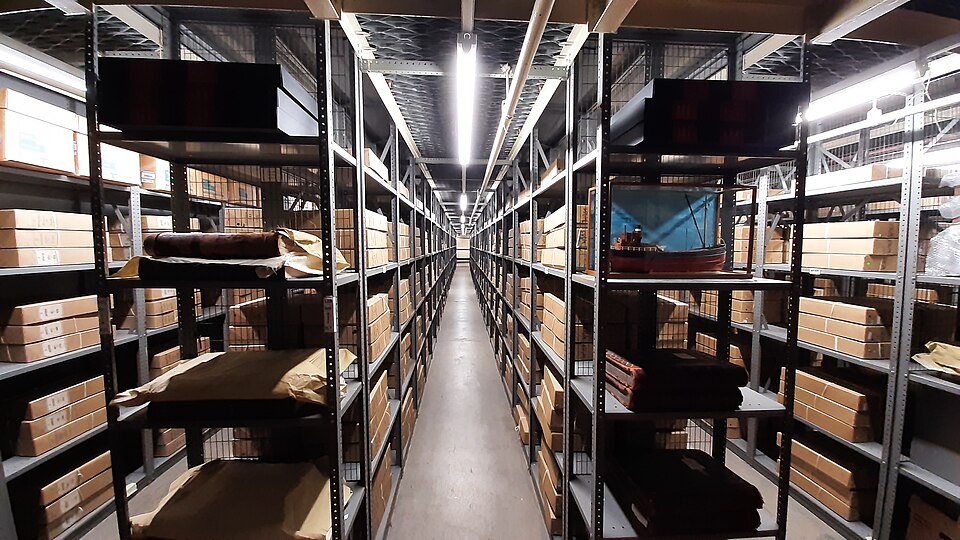
What most visitors never see is that the majority of museum collections are not on display. They live in storage facilities, carefully preserved for future exhibitions or long term conservation.

These environments are controlled for temperature, humidity and security. Objects may remain in storage for years before being moved again.

Museum logistics plays a crucial role in managing this hidden collection life. Objects are regularly rotated, loaned to other institutions or prepared for international exhibitions.

SMA Worldwide provides secure handling and transport solutions for stored collections across the UK and Europe. This includes careful movement between storage facilities and galleries, ensuring that condition is maintained at every stage.


Collaboration with curators and cultural institutions

Museum logistics is not an isolated function. It exists in close collaboration with curators, registrars, conservators and exhibition designers.

Curators shape the vision of an exhibition. Logistics makes that vision physically possible. Without coordination between both sides, even the most powerful concept cannot reach the gallery floor.

SMA Worldwide works as a partner within this ecosystem. Communication is constant. Planning is shared. Every detail is aligned so that creative intent is not compromised by operational limitation.

This collaborative approach is what allows exhibitions to move from idea to physical reality across the UK and Europe.


Conclusion: the invisible architecture behind culture

When you stand in a gallery, looking at an artwork, what you are really seeing is the final moment of a much larger journey. A journey built on coordination, timing and trust.

Museum and gallery logistics is the invisible architecture behind cultural experience. It connects storage rooms to exhibition halls. It connects countries, institutions and histories.

Across the UK and Europe, SMA Worldwide operates within this space where precision matters more than visibility. Where the success of the work is measured not in attention, but in absence of error.

Because in the end, the true art of museum logistics is not what you see on the wall. It is everything that made it possible to be there safely.

www.smaworldwide.com

0 0 Continue Reading →

Dr Sam M. Attia Recognised Among Top 10 Visionary Leaders Shaping the Future of Business in 2026

Global business leader, author, and strategist Dr Sam M. Attia has been featured by The Business Decode for his transformative leadership philosophy, innovation-driven vision, and long-standing impact across international industries.

He is recognised among the Top 10 Visionary Leaders Shaping the Future of Business in 2026, a prestigious feature that highlights individuals redefining leadership through innovation, strategy, and global influence.

A Recognition of Global Leadership and Vision

The Business Decode proudly showcases Dr Sam M. Attia on the front cover of its special edition, celebrating visionary leaders shaping the future of business.

This recognition reflects his strategic mindset, international experience, and commitment to building systems that prioritise long-term value, disciplined execution, and sustainable growth. His leadership continues to inspire entrepreneurs, executives, and organisations across multiple sectors.

Through SMA Worldwide, Dr Attia continues to develop initiatives focused on innovation, education, publishing, and business transformation, with the aim of bridging creativity, technology, and strategic thinking.

Read the full feature here:
https://thebusinessdecode.com/dr-sam-m-attia-top-10-visionary-leaders-shaping-the-future-of-business-in-2026/


A Multi-Sector Business Legacy

Dr Sam M. Attia’s professional journey spans more than five decades, covering both medicine and global business leadership.

He has led and contributed to ventures across multiple industries, including international logistics, manufacturing and distribution, security services, and strategic consultancy for major corporations operating across global markets.

In 2025, he expanded his work further by launching a publishing initiative under SMA Worldwide, focused on producing books and intellectual content aimed at entrepreneurs, executives, and future leaders.

Academic Excellence and Professional Credentials

Dr Attia holds an MBA with distinction from Kingston University in the United Kingdom and a PhD awarded with highest honours from Columbia University in the United States.

He is also a Fellow of the UK Institute of Directors and a Certified Chartered Management Consultant, reflecting a strong foundation in governance, strategy, and executive leadership.

His academic and professional background continues to inform his structured, analytical approach to decision-making and organisational development.

A Philosophy Built on Discipline and Clarity

Over the course of his career, Dr Attia has developed a leadership philosophy centred on precision, structure, and long-term thinking.

His approach is guided by three core principles:

diagnosis before action
coherence before scale
legacy before recognition

This philosophy has shaped his approach to building organisations that prioritise stability, clarity, and sustainable impact over short-term outcomes.

He often emphasises that while technology accelerates decision-making, it cannot replace human judgment, experience, and strategic intuition.

Author, Thinker, and Publisher

Dr Sam M. Attia is also a best-selling author with works including SMA CODE, SMA VIBES, and SMA GMD, available across international platforms.

His upcoming release, SMA Medicine Unboxed, is scheduled for publication in 2026, alongside a broader collection of works being developed under SMA Worldwide’s publishing arm.

These writings explore leadership, systems thinking, entrepreneurship, and the principles required to build resilient organisations in a rapidly changing world.

Among his notable works is Trumpology, a deep analytical study of leadership, power structures, economics, and geopolitical transformation.

Through his writing, Dr Attia aims to document principles that help future generations navigate complexity with clarity and discipline.

Innovation and Applied Technology

As industries evolve through artificial intelligence and automation, Dr Attia advocates for a balanced approach where technology enhances, rather than replaces, human decision-making.

He believes that organisations that combine innovation with strong governance, ethical leadership, and structured execution will define the next decade of global business.

One example of applied innovation is the development of intelligent consumer technologies, demonstrating how practical design and advanced systems can coexist in everyday life.

Leadership and Human Connection

Despite his global digital presence and technological focus, Dr Attia consistently highlights the importance of human connection in leadership.

He believes that real innovation is born from physical collaboration, shared environments, and meaningful dialogue.

Digital tools may connect systems, but true ideas are formed through human interaction, trust, and presence.

A Continuing Global Impact

The recognition by The Business Decode reinforces Dr Sam M. Attia’s position as a global thinker and leader whose work spans business, education, publishing, and innovation.

His influence continues to grow through SMA Worldwide, as he develops new projects designed to support entrepreneurs, executives, and organisations navigating an increasingly complex global economy.

Read the Full Feature

Explore the original publication here:
https://thebusinessdecode.com/dr-sam-m-attia-top-10-visionary-leaders-shaping-the-future-of-business-in-2026/

View the digital edition:
https://thebusinessdecode.com/top-10-visionary-leaders-shaping-the-future-of-business-in-2026-may-19/


0 0 Continue Reading →

5 Customer Service Strategies Elite Logistics Companies Rarely Discuss Openly

In the logistics sector, the difference between an average provider and a truly exceptional one is rarely just about speed or pricing. While many companies promote efficient delivery and competitive rates, the real defining factor behind long term client satisfaction is customer service.

The most successful logistics organisations understand that service quality is not an added benefit, it is a core operational advantage. Yet, the internal methods that drive this level of excellence are rarely made public.

In this article, we explore five customer service strategies used by leading logistics providers, including SMA Worldwide, to consistently deliver outstanding results. These approaches extend far beyond basic shipment tracking and focus instead on proactive communication, advanced workforce development, tailored service design, continuous feedback integration, and effective crisis response.

Together, they form the foundation of a logistics experience that consistently builds trust, reliability, and long term client relationships.

Strategy 1, Proactive Communication Systems

One of the most common causes of client dissatisfaction in logistics is uncertainty. When customers are left without updates, even minor delays can create frustration and weaken trust.

Leading logistics companies eliminate this issue by adopting proactive communication systems that keep clients informed before problems escalate.

  • Automated real time alerts, Companies such as SMA Worldwide utilise advanced tracking technologies that immediately notify clients of potential disruptions such as delays, rerouting, or schedule changes
    • Scheduled communication touchpoints, Clients receive consistent updates throughout the delivery process, ensuring full visibility at every stage of the shipment journey
    • Transparent milestone reporting, Each stage of the logistics process is clearly communicated, including estimated arrival times, live tracking data, and immediate updates when circumstances change

By prioritising proactive communication, elite providers reduce uncertainty, strengthen transparency, and ensure clients remain confident and informed throughout the entire process.

Strategy 2, Advanced Staff Training Beyond Core Logistics

While logistics operations rely heavily on systems and processes, the human element remains central to service excellence. High performing logistics companies invest heavily in staff development that goes far beyond operational training.

This includes communication skills, emotional intelligence, and structured problem solving capabilities designed to improve client interaction quality.

  • Deep understanding of client operations, Employees are trained to view shipments as critical business components rather than isolated transport tasks, allowing for more informed decision making
    • Advanced problem solving under pressure, Staff are equipped to respond quickly and creatively in challenging situations, ensuring minimal disruption to client operations
    • Service driven communication skills, Employees are trained to communicate with clarity, empathy, and professionalism, particularly during delays or unexpected challenges

This level of training ensures that every client interaction is meaningful, solution focused, and aligned with long term relationship building.

Strategy 3, Bespoke and Scalable Service Frameworks

No two clients operate in the same way, and leading logistics providers recognise that standardised service models are not sufficient in a competitive environment.

Instead, they design flexible and tailored service frameworks that adapt to each client’s operational requirements.

  • Fully customised logistics solutions, Providers take time to understand specific shipment needs, delivery timelines, and operational priorities before designing a service approach
    • Scalable service options, Whether a client requires high touch premium support or more cost efficient logistics solutions, services are adjusted without compromising reliability or quality
    • Adaptive long term planning, As business needs evolve, service models are continuously refined to ensure ongoing alignment with client expectations

This tailored approach strengthens partnerships, improves operational efficiency, and enhances overall service satisfaction.

Strategy 4, Continuous Feedback and Operational Improvement

Customer feedback is valuable, but only when it is actively used to drive change. Elite logistics companies distinguish themselves by embedding feedback directly into their operational systems.

  • Structured feedback collection systems, Leading providers gather detailed insights across multiple touchpoints including delivery performance, communication quality, and customer support experience
    • Direct operational integration, Feedback is not simply recorded, it is analysed and used to implement measurable improvements across logistics processes
    • Ongoing service refinement, Continuous evaluation ensures that communication, efficiency, and reliability are consistently improving over time

This commitment to continuous improvement creates a service model that evolves alongside customer expectations and industry demands.

Strategy 5, Excellence in Crisis and Disruption Management

In logistics, disruption is unavoidable. External factors such as weather conditions, supply chain interruptions, and global events can all impact delivery timelines.

What defines elite logistics providers is not the absence of disruption, but the ability to respond effectively when it occurs.

  • Structured emergency response systems, Leading companies maintain clear and coordinated crisis management plans to ensure immediate action when issues arise
    • Rapid recovery execution, Dedicated teams act quickly to minimise delays and restore normal operations as efficiently as possible
    • Trust reinforcement through transparency, Clear and honest communication during disruptions often strengthens client relationships rather than weakening them

Effective crisis management transforms challenges into opportunities to demonstrate reliability, accountability, and professionalism.

SMA Worldwide, A Practical Example of These Strategies in Action

SMA Worldwide represents a strong example of these five customer service strategies being applied in real world operations. Through advanced communication systems, highly trained teams, and a strong focus on client understanding, the company consistently delivers a high standard of logistics service.

Their approach to tailored service frameworks ensures that each client receives solutions aligned with their operational needs. At the same time, their commitment to feedback integration allows for continuous improvement across all service areas.

Combined with a structured and responsive crisis management capability, SMA Worldwide maintains consistency, reliability, and trust across every shipment it handles.

By working with SMA Worldwide, businesses gain a logistics partner focused not only on delivery performance, but also on long term service quality and client satisfaction.

Conclusion

Outstanding logistics service is not defined solely by successful delivery outcomes. It is built on communication, adaptability, consistency, and responsiveness.

Leading logistics providers such as SMA Worldwide understand this distinction and apply structured strategies to ensure they consistently exceed expectations.

If you are looking to improve your logistics operations and experience a higher standard of service, contact SMA Worldwide today.


0 0 Continue Reading →

How Smart Brands Use 3PL Warehousing to Trick the Supply Chain and Save Thousands

The global supply chain is fundamentally rigged against mid-sized and growing businesses. If you are operating on traditional logistics models, the rules of the game dictate that the more you grow, the more capital you must tie up in overheads. More stock requires more square footage. More orders demand more staff. More destinations mean escalating courier tariffs.

For years, enterprise giants dominated the market simply because they had the financial muscle to build massive distribution networks, buy up premium warehouse space, and command the lowest shipping rates from carriers.

But recently, the paradigm has shifted. Agile, fast-growing B2B brands and fast-scaling e-commerce companies are competing directly with industry heavyweights—and they are winning. They aren’t doing it by outspending the competition; they are doing it by outsmarting the system.

By leveraging advanced Third-Party Logistics (3PL) models, these businesses are deploying strategic manoeuvres that effectively “trick” traditional supply chain bottlenecks, slashing operating costs and capital expenditure by thousands of pounds.

Here is an insider look at the exact strategies smart brands are using to rewrite the rules of logistics and how partnering with a tech-driven 3PL provider like SMA Worldwide makes it possible.

Trick #1: Decentralised Warehousing (The Art of Being Everywhere at Once)

In traditional logistics, the standard approach was to store all inventory in one large, centralised warehouse. On paper, it looks efficient: one team, one roof, one inventory log. However, in practice, a single hub is a geographic trap. If your warehouse is based in the Midlands and you need to ship a critical consignment to a B2B client in northern Scotland or a time-sensitive order to a customer in mainland Europe, you are immediately penalised by long transit times and premium, long-distance freight charges.

Smart brands don’t tie themselves down to a single location. Instead, they use a 3PL’s existing infrastructure to distribute their stock strategically across multiple fulfilment hubs.

When you partner with SMA Worldwide, you instantly gain access to a sophisticated, multi-location warehousing network. Instead of shipping everything from a single base, your high-demand SKUs are split and positioned closer to major shipping corridors and customer clusters.

The Payoff

This strategy effectively tricks standard shipping zones. By moving the starting line of the delivery closer to the final destination, what would have been an expensive, multi-day cross-border journey becomes a fast, cost-effective local delivery. You drastically cut the “cost-per-mile” of your distribution, fulfil deliveries in a fraction of the time, and offer the rapid turnaround times that modern business clients demand, all without owning a single brick of regional real estate.

Trick #2: The Illusion of Scale (Inheriting Enterprise Buying Power)

One of the harshest realities of B2B commerce is carrier tiering. Commercial courier networks and global freight liners reserve their best, deeply discounted rates for corporate monoliths moving hundreds of thousands of pallets a month. If you are a mid-market brand shipping modest volumes, you are stuck paying standard commercial tariffs. This margin disparity makes it incredibly difficult to compete on pricing.

To bypass this roadblock, smart businesses use the “illusion of scale” via a 3PL partner.

When you manage your fulfilment through SMA Worldwide, you aren’t negotiating with carriers as an isolated business. Instead, your freight volume is pooled together with the aggregate volume of our entire global client base.

The Payoff

Because SMA Worldwide manages high-volume freight across an extensive domestic and international network, we hold massive leverage with top-tier global carriers. When you ship through us, your business instantly inherits these corporate-level preferential rates and priority service agreements. You get the financial footprint, pricing advantages, and supply chain clout of an international giant on day one, immediately driving down your overheads and passing those thousands of pounds in savings straight to your bottom line.

Trick #3: Asset-Light Flexibility (Doxxing the Real Estate Trap)

Signing a traditional commercial warehouse lease is one of the highest-risk financial commitments a growing brand can make. Commercial property leases tie you into rigid, multi-year fixed overheads.

If your business experiences a seasonal dip, or if global market conditions shift, you are still legally obligated to pay for thousands of square feet of empty, unproductive air. Conversely, if your sales suddenly skyrocket, you quickly run out of space, resulting in congested aisles, operational inefficiencies, delayed orders, and missed revenue opportunities.

The smartest brands refuse to get caught in this real estate trap. They adopt an asset-light operational model by switching to the flexible, pay-as-you-use pricing structure of a 3PL.

At SMA Worldwide, we provide completely scalable warehousing and logistics support tailored entirely to your live commercial data.

  • During peak seasons: Your designated storage space and fulfilment support expand seamlessly to handle the influx of inventory and orders, ensuring you never miss a delivery deadline.
  • During quieter quarters: Your footprint scales back down automatically.

The Payoff

By converting a massive, rigid fixed cost into a fluid variable cost, you build ultimate financial resilience into your corporate structure. You only ever pay for the exact rack space and warehouse labour you utilise on a month-to-month basis. This cash-flow hack frees up valuable working capital that can be reinvested directly into product development, marketing, and core business growth.

Trick #4: Automated Dark Warehousing (Leveraging Tech You Didn’t Pay For)

To run a highly efficient modern warehouse in-house, an immense amount of capital must be poured into software and automation. Implementing an enterprise-grade Warehouse Management System (WMS), integrating automated sorting machinery, setting up barcode scanning infrastructure, and configuring real-time digital tracking systems requires hundreds of thousands of pounds in upfront investment, not to mention months of disruptive IT implementation and staff training.

Without this technology, manual warehousing quickly falls prey to human error—mispicked items, inaccurate inventory counts, forgotten backorders, and chaotic returns processing.

Smart brands avoid this massive R&D expenditure entirely. They trick the tech barrier by outsourcing to a 3PL provider that has already invested heavily in cutting-edge logistics technology.

SMA Worldwide plugs directly into your existing e-commerce storefront, digital marketplace, or internal ERP system. The moment an order is placed by your client, our integrated systems register it instantly, generating automated picking lists and tracking numbers without requiring a single manual keystroke from your office team.

The Payoff

You get a state-of-the-art, automated fulfillment engine operating flawlessly in the background of your business without spending a single penny on software development or hardware procurement. This tech integration guarantees hyper-accurate inventory visibility, slashes picking errors to near zero, and automates low-stock notifications before you ever run into a stockout crisis.

Trick #5: Reclaiming Your Core Competency (The Opportunity Cost Saving)

The most expensive hidden drain on any business is the misallocation of leadership time. When senior executives, founders, or creative managers are spending their afternoons resolving missed carrier collections, tracking down lost international pallets, managing warehouse shift rotas, or dealing with damaged stock complaints, the business is losing money.

Every hour your team spends micro-managing basic logistics is an hour stolen from high-value tasks like strategic brand building, closing client deals, refining product lines, or improving customer retention.

The final, ultimate trick that smart brands play on the supply chain is removing themselves from it entirely. They shift from being a logistics operator to being a strategic overseer.

By trusting SMA Worldwide to manage the day-to-day complexities of freight forwarding, customs clearance, picking, packing, and distribution, you completely eliminate the operational noise that slows your business down.

The Payoff

You trade daily logistics headaches for an expert partner that handles everything seamlessly under strict Service Level Agreements (SLAs). The savings generated here aren’t just measured in reduced courier tariffs; they are realised in the exponential growth that happens when your best minds are finally free to focus on driving revenue.

Conclusion: Stop Fighting the Supply Chain. Start Outsmarting It.

The modern market moves too quickly to rely on outdated, cumbersome in-house logistics models. You do not need a multi-million-pound capital expenditure budget to compete with the industry giants—you simply need a smarter, more agile strategy.

By leveraging decentralised hubs, inherited volume discounts, scalable space, and advanced automation, you can effectively bypass traditional supply chain limitations, protect your margins, and save thousands of pounds annually.

Outsmarting the supply chain isn’t about cutting corners; it’s about partnering with an established logistics infrastructure designed to win from day one.

Ready to uncover the hidden savings in your current logistics setup?

Contact the SMA Worldwide team today for a comprehensive, tailored supply chain consultation, and let us show you exactly how to build a leaner, faster, and more profitable fulfilment engine for your business.

www.smaworldwide.com


0 0 Continue Reading →

UK Logistics Cost Reduction Guide, How UK Businesses Are Losing Thousands in Pallet Transport and How SMA Worldwide Can Fix Inefficiencies Fast

Every day, businesses across the UK lose thousands of pounds due to hidden inefficiencies in pallet logistics. These losses are rarely obvious, quietly draining profit margins and putting unnecessary pressure on operations and staff. From underutilised lorries to poorly planned routes and outdated administrative processes, each inefficiency adds up, reducing your competitive edge and affecting customer satisfaction.

SMA Worldwide specialises in uncovering these hidden costs and transforming logistics into a strategic advantage. With decades of experience, advanced technology, and a consultative approach, SMA Worldwide helps UK businesses not only reduce costs but also improve delivery reliability, streamline operations, and enhance the overall customer experience.

Why Inefficient Logistics Is Costing Your Business Money

Underutilised Transport Capacity

One of the most common and costly inefficiencies in UK logistics is underutilised lorry space. Every trip with unused capacity represents wasted money on fuel, driver hours, and vehicle wear. Many businesses fail to notice this because the costs are spread across multiple shipments and months, appearing negligible in isolation. SMA Worldwide addresses this by analysing your shipments and designing solutions to maximise every lorry load, whether through shared-load programs or smarter scheduling, ensuring that every journey is cost-effective and environmentally conscious.

Poor Route Planning

Inefficient routing is another hidden cost that significantly impacts profits. Longer, unnecessary routes increase fuel consumption, cause vehicle wear, and delay deliveries, affecting client satisfaction. SMA Worldwide uses advanced route optimisation through the Palletways network to identify the fastest, most cost-effective paths for every pallet, taking into account traffic patterns, delivery windows, and load priorities. This not only saves money but also improves reliability and strengthens relationships with your customers.

Limited Visibility

Without a clear view of your logistics operations, inefficiencies often remain invisible until they result in delays, losses, or customer complaints. Many businesses struggle because they rely on outdated tracking methods and manual reporting. SMA Worldwide provides real-time visibility into every shipment, offering automated tracking, performance metrics, and actionable insights. This empowers your team to make informed decisions, quickly identify bottlenecks, and implement solutions before small issues turn into costly problems.

Manual and Outdated Processes

Many UK businesses still rely on manual processes for booking, scheduling, and reporting shipments. These outdated systems increase the risk of human error, create unnecessary administrative work, and slow down operations. SMA Worldwide replaces these with automated, technology-driven solutions, streamlining workflows and freeing up your team to focus on strategic tasks. By reducing administrative burden, your operations become more efficient, reliable, and profitable.

How SMA Worldwide Optimises UK Pallet Logistics

Advanced Route Optimisation

SMA Worldwide leverages cutting-edge technology within the Palletways network to ensure that every pallet travels via the most efficient route possible. This approach reduces fuel costs, minimises driver hours, and decreases vehicle wear while improving delivery times. For businesses that operate across multiple UK regions, this optimisation can translate into thousands of pounds in annual savings, fewer delays, and better customer service.

Load Maximisation Expertise

Making full use of every lorry is crucial to controlling costs and reducing environmental impact. SMA Worldwide helps businesses consolidate shipments and implement shared-load strategies that minimise empty space. By improving load efficiency, companies reduce the number of trips required, lower fuel and operational costs, and simultaneously cut carbon emissions. This approach not only saves money but also enhances your business’s sustainability credentials—a growing priority for clients and partners.

Technology-Driven Solutions

SMA Worldwide equips businesses with platforms that provide real-time shipment tracking, automated booking, and in-depth performance analytics. These tools give full visibility of your logistics operations, highlight inefficiencies, and enable ongoing improvements. By leveraging technology, SMA Worldwide allows businesses to make data-driven decisions, reduce administrative workload, and ensure that every delivery is planned, monitored, and executed to the highest standard.

Consultative Partnership Approach

SMA Worldwide does more than provide logistics services—we become a strategic partner invested in your success. Through regular service reviews, transparent pricing, and tailored recommendations, we help businesses identify hidden costs, optimise operational workflows, and continuously improve performance. Our consultative approach ensures that logistics is aligned with your business objectives, turning a cost centre into a competitive advantage.

Operational Excellence

From standardising packaging to implementing quality control checkpoints, SMA Worldwide ensures that goods arrive safely, on time, and in perfect condition. Predictive analytics help anticipate demand surges, preventing last-minute interventions that often drive up costs. By combining meticulous planning with advanced technology and operational expertise, SMA Worldwide allows UK businesses to deliver exceptional service without unnecessary expenses.

Proven Results with SMA Worldwide

UK businesses partnering with SMA Worldwide consistently achieve measurable improvements in logistics operations, including:

  • Lower cost per delivery through smarter routing and improved load efficiency
    • Reduced damage rates thanks to standardised handling and packaging processes
    • Higher customer satisfaction with reliable, on-time deliveries
    • Improved operational efficiency through automated systems and real-time visibility
    • Greater scalability that enables expansion into new regions and markets

A simple logistics audit by SMA Worldwide can reveal where your current operations are losing money and how much you could save, often uncovering thousands of pounds in annual savings.

Why You Should Act Now

Every day your logistics remain unoptimised, money is being lost. In a highly competitive UK market, inefficient logistics reduces profitability, strains operations, and limits growth potential. SMA Worldwide provides the expertise, technology, and strategic insight to eliminate these inefficiencies, giving your business a measurable advantage over competitors.

By acting today, you can turn logistics from a hidden cost into a key driver of efficiency, sustainability, and customer satisfaction.

Take the First Step with SMA Worldwide

SMA Worldwide offers a free logistics audit to help UK businesses understand exactly where money is being lost and how much can be saved. This no-obligation review identifies inefficiencies, highlights cost-saving opportunities, and provides actionable recommendations to optimise pallet transport operations.


Contact SMA Worldwide

Website, www.smaworldwide.com
Phone, 01923 290 490
Email, cs@smaworldwide.com


0 0 Continue Reading →