You have a collection address, a delivery destination and a price. Before accepting a freight quote, it is worth checking exactly what that price covers and the conditions attached to it.
International shipping can involve several stages, from collection and export handling to the main journey, customs clearance and final delivery. A quote may cover the complete movement or only certain parts of it.
Five checks can help you compare quotations, budget more accurately and reduce unexpected costs.
1. Check whether fuel surcharges are included
Fuel costs can affect the price of transporting goods by road, air and sea. Depending on the service and provider, a fuel surcharge may be included in the quoted total or shown separately.
Ask whether the quoted price includes the applicable fuel surcharge and whether that charge can change before your shipment moves. If a surcharge is listed as a percentage, confirm which part of the price it applies to.
For regular shipments, establish how changes will be communicated. Understanding the arrangement helps your team distinguish the underlying transport rate from charges that may vary.
2. Confirm how long the quote remains valid
A freight quote is usually based on the shipment information and market conditions available when it is prepared. The price may be valid for a particular period, departure or collection date.
Check the expiry date and ask what happens if your supplier is not ready on time. A delay may mean the rate or transport availability needs to be checked again.
Also confirm what accepting the quote secures. A quotation and a confirmed booking may represent different stages of the process, particularly where space must be reserved with another carrier.
If your shipping date is uncertain, explain that when requesting the quote. Your freight provider can then clarify which details will need reconfirming.
3. Establish which collection and delivery costs are covered
The main international journey is only one part of a shipment. Goods may also need collection from the supplier, transport to a terminal, handling at the destination and onward delivery.
Ask where the quoted service starts and ends. Does it cover collection from the supplier’s premises and delivery to the recipient’s address, or does it begin or finish at a port or airport?
Check the practical arrangements at both ends. Limited vehicle access, a required delivery appointment, waiting time or specialist unloading equipment may affect the service and price.
Give your provider the full addresses and explain any access restrictions before booking. A delivery to a staffed warehouse with unloading facilities can require different arrangements from a delivery to a site without them.
4. Separate transport charges from customs costs
Customs duties, import VAT and clearance charges can be separate from the price of moving your goods. A quote that includes customs clearance does not necessarily include the duties and taxes payable on the shipment.
Ask which customs services are included and who will be responsible for any additional charges. Depending on the goods and movement, these could include inspections, storage while clearance is pending or requests for further documentation.
Agree the shipping terms with your supplier and confirm who is responsible for each stage. Make sure the freight provider’s instructions reflect that agreement.
Your commodity code, customs value and origin information can affect the customs treatment. Have those details checked before dispatch, rather than relying on the transport quote as a complete calculation of your import costs.
5. Understand what happens if the shipment details change
A quote depends on the information supplied. Changes to the number of pieces, dimensions, weight, packaging or type of goods may require a revised price.
Provide accurate measurements for the packed shipment, including the pallet where applicable. Depending on the service, pricing may take account of the space occupied as well as the actual weight.
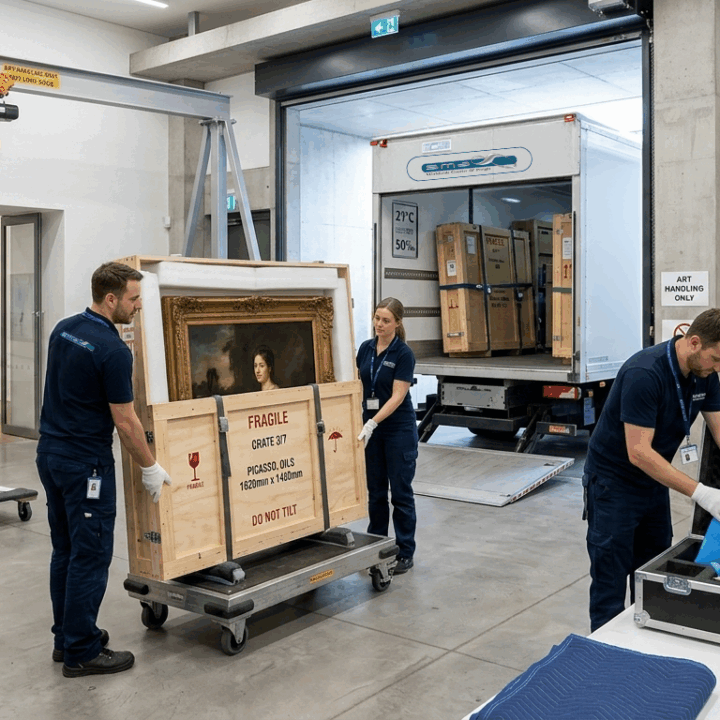
Tell your provider about goods requiring particular arrangements, such as dangerous goods, temperature-sensitive materials, fragile items or oversized pieces. These requirements should be assessed before the shipment is booked.
If your supplier adds another carton or changes the packaging, pass on the updated details. Confirm whether the original quote still applies before collection.
Compare the complete service
Two quotes can look similar while covering different things. One may include collection, clearance and final delivery, while another covers only the main transport leg.
When comparing options, check:
The aim is to understand the total arrangement clearly enough to make an informed decision. A lower initial figure is useful only when you know what remains to be paid or organised.
Freight shipping with SMA Worldwide
SMA Worldwide offers international shipping and worldwide air and sea freight, alongside courier services, pallet distribution and warehousing.
Sharing accurate shipment details before booking helps the team identify the transport requirements and explain the scope of your quotation. Include what you are sending, the packed dimensions and weight, the collection and delivery addresses, and any timing or handling requirements.
Planning your next shipment? Contact SMA Worldwide to discuss your requirements and request a quote.
01923 290 490