Museums and galleries feel still when you walk through them. Quiet rooms. Controlled light. Objects that seem to belong exactly where they are meant to be. But that stillness is an illusion.
Behind every exhibition is motion. Constant planning. Careful timing. Objects crossing borders, passing through hands, being packed, unpacked, inspected, protected. What the visitor experiences as calm is actually the result of precision that rarely gets seen.
Museum logistics in the UK and across Europe is not simply transport. It is the coordination of fragile, high value and often irreplaceable cultural objects through environments that leave no room for error.
This is where SMA Worldwide operates. Not in the spotlight of the gallery floor, but in the systems that make the exhibition possible in the first place.
The journey of an artwork from storage to exhibition
Every piece in a museum has a journey, even if that journey is not visible to the public. Before an object reaches a gallery wall, it may spend months or years in storage. When it is selected for exhibition, a carefully controlled process begins.
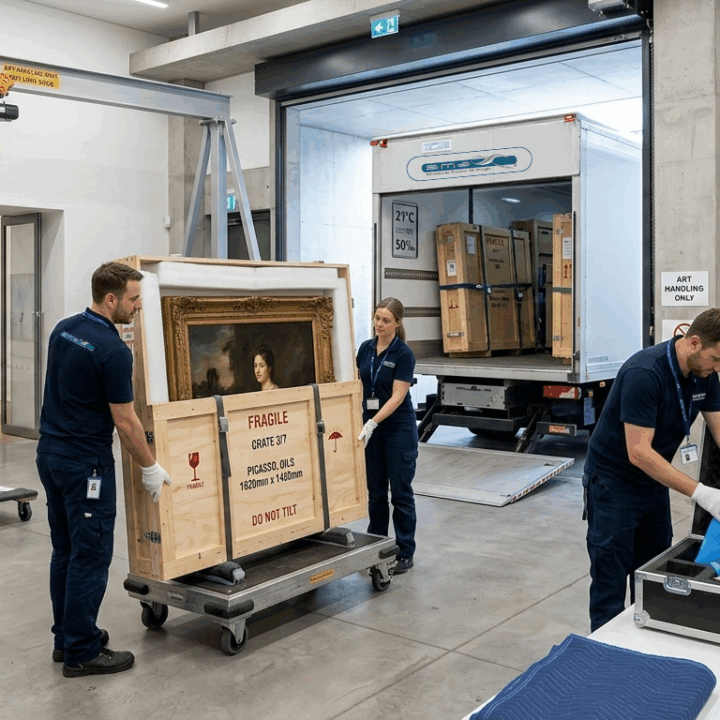
It is removed from storage under strict handling procedures. It is assessed, documented and prepared for packing. Specialist materials are used to ensure protection during movement. Custom crates are often built to match the exact dimensions and fragility of the object.
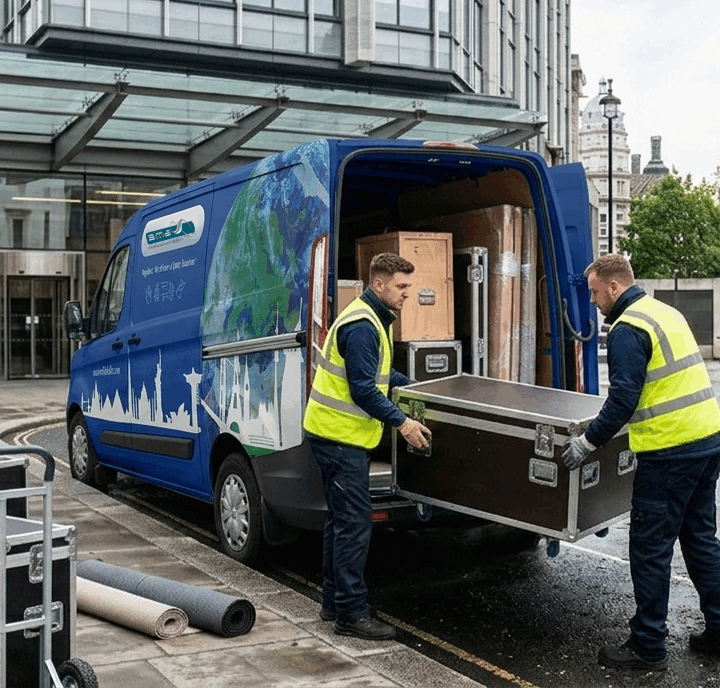
From there, the artwork enters transit. This may involve road, air or sea transport depending on where the exhibition is taking place. Each stage requires coordination between logistics teams, curators, registrars and customs authorities.
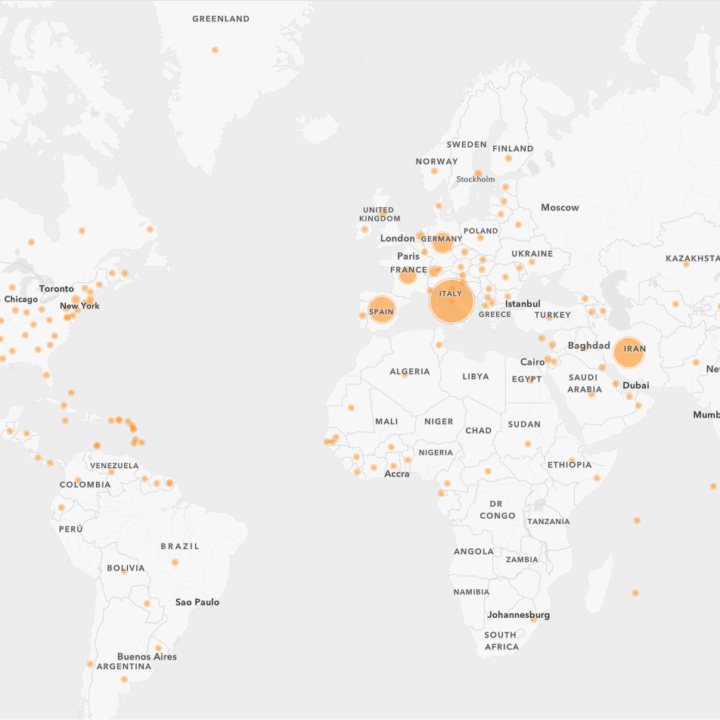
Across the UK and Europe, museum logistics services must account for distance, regulation and environmental control. SMA Worldwide manages this process end to end, ensuring that each movement is planned with precision and handled with complete care, from collection storage to final installation.
Precision handling where there is no margin for error
Unlike standard freight, museum logistics carries emotional and cultural weight. A single mistake is not just financial loss. It can mean irreversible damage to history.
Temperature changes, vibration, humidity and light exposure all pose risks. Even small inconsistencies can affect sensitive materials such as canvas, paper, wood, textiles and sculpture.
This is why handling procedures are so strict. Every movement is intentional. Every lift is controlled. Every surface is considered.
SMA Worldwide operates with specialist handling teams trained specifically for fine art logistics in the UK and Europe. The focus is not speed but control. Not volume but accuracy. From packing to installation, each step is designed to protect the integrity of the object, no matter its size, age or value.
Customs, compliance and the complexity of crossing borders
One of the least visible but most complex parts of museum logistics is customs clearance. Art does not move freely by default. It moves under regulation.
Across Europe and the UK, cultural objects often require detailed documentation. Temporary import and export permits, insurance declarations, condition reports and provenance records all need to be accurate and aligned before movement can take place.
Post Brexit, the movement of art between the UK and Europe has become even more sensitive, requiring deeper expertise in customs procedures and border compliance.
SMA Worldwide supports museums, galleries and private collections by managing these processes directly. The aim is simple. Remove friction. Prevent delays. Ensure that exhibitions are not disrupted by administrative barriers.
Museum logistics service UK and Europe is not only about transport. It is about regulatory knowledge that keeps cultural exchange moving.
Time critical installations and exhibition deadlines
In the world of museums and galleries, timing is absolute. Exhibition opening dates do not move. Installation windows are often short, tightly scheduled and coordinated across multiple teams.
Delays in logistics can affect lighting installation, curation, press previews and public opening schedules. Everything is interconnected.
This is where reliability becomes essential. Museum logistics is not flexible in the way other sectors can be. It must arrive on time, every time.
SMA Worldwide works within these constraints by planning backwards from installation deadlines. Every route, every movement and every clearance step is aligned with the final exhibition schedule. This ensures that artworks arrive exactly when they are needed, ready for installation without disruption.
Storage and the hidden life of collections
What most visitors never see is that the majority of museum collections are not on display. They live in storage facilities, carefully preserved for future exhibitions or long term conservation.
These environments are controlled for temperature, humidity and security. Objects may remain in storage for years before being moved again.
Museum logistics plays a crucial role in managing this hidden collection life. Objects are regularly rotated, loaned to other institutions or prepared for international exhibitions.
SMA Worldwide provides secure handling and transport solutions for stored collections across the UK and Europe. This includes careful movement between storage facilities and galleries, ensuring that condition is maintained at every stage.
Collaboration with curators and cultural institutions
Museum logistics is not an isolated function. It exists in close collaboration with curators, registrars, conservators and exhibition designers.
Curators shape the vision of an exhibition. Logistics makes that vision physically possible. Without coordination between both sides, even the most powerful concept cannot reach the gallery floor.
SMA Worldwide works as a partner within this ecosystem. Communication is constant. Planning is shared. Every detail is aligned so that creative intent is not compromised by operational limitation.
This collaborative approach is what allows exhibitions to move from idea to physical reality across the UK and Europe.
Conclusion: the invisible architecture behind culture
When you stand in a gallery, looking at an artwork, what you are really seeing is the final moment of a much larger journey. A journey built on coordination, timing and trust.
Museum and gallery logistics is the invisible architecture behind cultural experience. It connects storage rooms to exhibition halls. It connects countries, institutions and histories.
Across the UK and Europe, SMA Worldwide operates within this space where precision matters more than visibility. Where the success of the work is measured not in attention, but in absence of error.
Because in the end, the true art of museum logistics is not what you see on the wall. It is everything that made it possible to be there safely.