Skip to Content

Category Archives: SMA Pallets Ltd

How SMA Pallets ID Technology Keeps Your Pallets Moving Safely and Efficiently

As proud members of the Palletways network, SMA Worldwide is committed to keeping customers informed about the technology that helps their pallets move safely, efficiently and on time.

One of the most important developments within the network in recent years has been SMA Pallets ID. This advanced sensor system is fitted directly to forklift trucks and is now used across Palletways hubs throughout the UK and Europe.

By capturing essential information while pallets are being handled, SMA Pallets ID helps improve speed, accuracy, safety and visibility across the entire delivery journey.

What Is SMA Pallets ID?

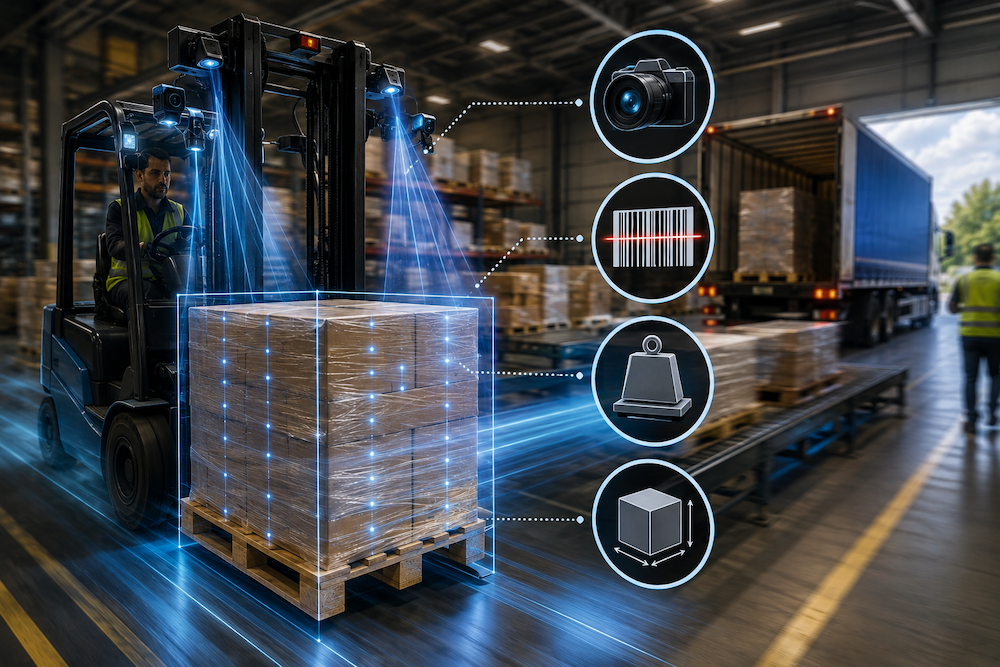
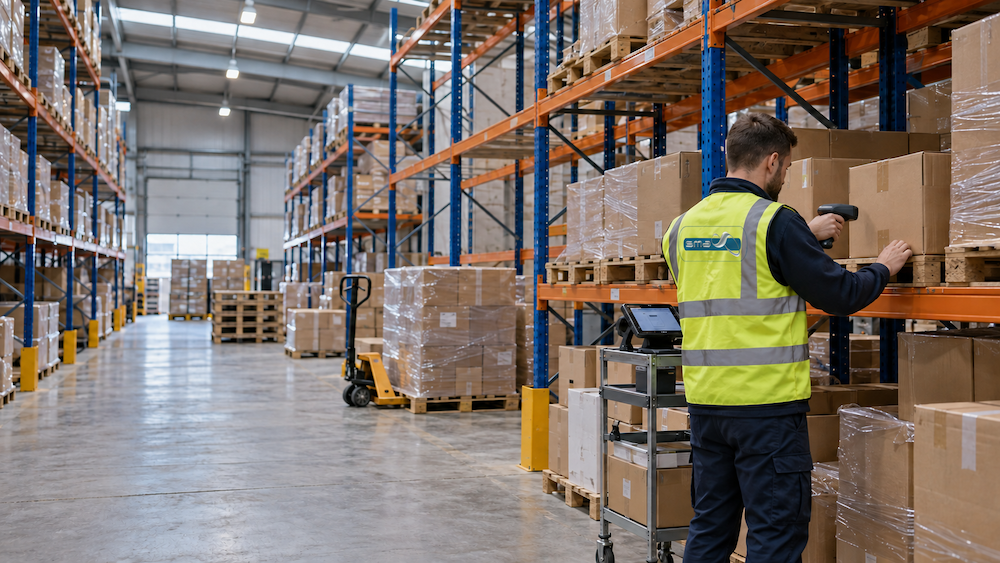
SMA Pallets ID combines cameras, barcode scanners, weighing technology and dimension measuring tools fitted directly to forklift trucks across the Palletways network.

Traditionally, pallets may need to be stopped, weighed, measured and scanned separately at different points within a hub. SMA Pallets ID brings these processes together, capturing the necessary information in one movement while the forklift operator continues with their usual warehouse duties.

The system combines four important operational processes:

1. Image capturing

A photograph of each pallet is taken automatically, creating a clear visual record of its condition as it moves through the network. This provides greater traceability and can help identify when and where any damage may have occurred.

2. Barcode scanning

The pallet barcode is read automatically during handling, reducing the need for manual scanning and helping ensure that each consignment is correctly identified and tracked.

3. Weight measuring

The weight of the pallet is recorded as soon as it is lifted by the forklift truck. This removes the need to place it on a separate static scale and helps confirm that the information provided at the time of booking is accurate.

4. Dimension measuring

The length, width and height of the pallet are captured at the same time. This removes the need for a separate measuring process and helps identify oversized or incorrectly declared consignments.

Why SMA Pallets ID Continues to Set the Standard

When SMA Pallets ID was introduced, it was described as a world first for the logistics industry. Its ability to capture images, barcodes, weight and dimensions simultaneously while a pallet is moving continues to make it an important part of the Palletways network.

Older systems, including fixed archway scanners, generally capture images and barcode information from a static location. SMA Pallets ID goes further by also gathering accurate weight and dimension data without stopping the pallet or interrupting normal hub operations.

The technology also works alongside the SMA Pallets Portal, the network’s cloud basedplatform for monitoring consignments from the moment they are booked through to final delivery.

Together, these systems provide Palletways members such as SMA Worldwide with a clearer view of each consignment’s location, condition and progress throughout its journey.

The Benefits in Practice

Greater operational efficiency

SMA Pallets ID reduces the need for static scales, handheld barcode readers and separate measuring equipment. By bringing several processes together, pallets can move through the network more quickly and accurately, with less manual handling and fewer unnecessary delays.

Improved health and safety

Oversized, overweight or visibly damaged pallets can be identified at the point of handling. This allows potential problems to be investigated and corrected before the pallet continues through the network or is loaded for delivery.

Accurate weight and dimension information also supports safer vehicle planning and more effective use of available space.

Better visibility and traceability

Automatic image capturing provides a visual record of the pallet at different stages of its journey. Combined with barcode scanning and live tracking information, this gives both SMA Worldwide and our customers greater confidence and transparency.

More accurate information

Reliable weight and dimension data supports accurate billing, improved network planning and better decision making. It also helps reduce the risk of delays or additional charges caused by incorrectly declared pallet details.

What Does This Mean for SMA Worldwide Customers?

As a long-standing member of the Palletways network, SMA Worldwide benefits from continued investment in technology, infrastructure and operational standards.

Whether you need to send a single pallet or manage regular pallet deliveries across the UK and Europe, SMA Pallets ID provides greater visibility and reassurance throughout the delivery process.

With accurate scanning, automatic measurements, photographic records and real time tracking, your pallets can move through the network with greater efficiency, safety and accountability.

SMA Worldwide combines this technology with experienced customer support and reliable pallet distribution services, helping businesses transport their goods with confidence.

To learn more about our pallet delivery services or request a quotation, visit www.smaworldwide.com or email cs@smaworldwide.com.

0 0 Continue Reading →

What to Do If Your Pallet Arrives Damaged?

When you are waiting for an important pallet delivery, discovering that the goods have arrived damaged can be frustrating and disruptive.

For businesses, damaged goods can delay operations, affect customer orders and place unnecessary pressure on supplier relationships. Although every effort is made to transport pallets safely, damage can occasionally happen during handling or transit.

Knowing what to do when your delivery arrives can make it easier to report the problem, provide the necessary evidence and support a faster investigation.

Inspecting Your Pallet Delivery

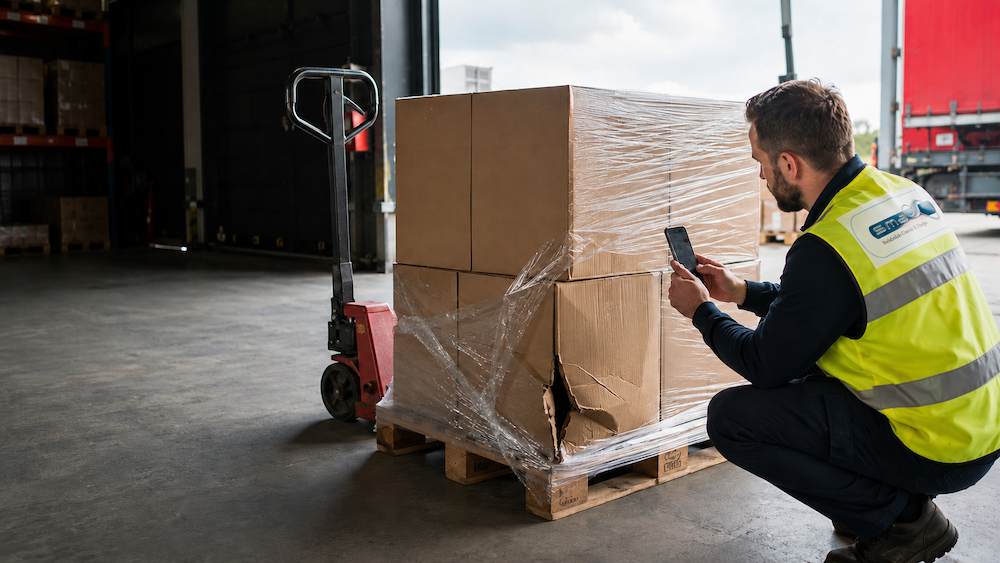
When your pallet arrives, you should inspect the shipment carefully before accepting it, wherever it is safe and practical to do so. Customers should normally be allowed up to 15 minutes to check the condition of their delivery.

Look closely at the pallet, packaging, wrapping and any visible parts of the goods. Signs of possible damage may include torn packaging, crushed boxes, loose wrapping, broken pallet boards or items that appear to have moved during transit.

If you notice any damage, make sure it is clearly recorded on the delivery note before signing it. You should also inform the driver immediately so the issue can be added to the delivery record and reported to the transport company.

Take clear photographs of the pallet from several angles, including close photographs of the affected areas. Where possible, photograph the pallet before removing any wrapping or packaging, as this helps show how the goods appeared when they arrived.

There are two main types of pallet damage that customers should be aware of: visible damage and hidden damage.

What Is Visible Pallet Damage?

Visible damage is damage that can be identified before the packaging is opened.

This could include severely torn wrapping, crushed or dented boxes, exposed goods, broken pallet boards or items leaning beyond the edges of the pallet. Damage may also occur if handling equipment, such as a forklift truck, makes contact with or penetrates the packaging.

These signs may indicate that the goods inside have also been affected, even if the full extent of the damage is not immediately clear.

What Should You Do If You Notice Visible Damage?

If visible damage is present when the delivery arrives, record the specific nature of the damage on the delivery or consignment note.

Avoid using general descriptions such as “damaged” where possible. A more detailed note, such as “packaging torn on the left side” or “bottom pallet board broken,” can provide clearer evidence for any investigation.

You should then:

1. Inform the delivery driver before they leave.
2. Take clear photographs of the complete pallet, the damaged packaging and any affected goods.
3. Keep copies of the delivery note and any other relevant documents.
4. Contact the company that arranged the shipment or supplied the goods immediately.
5. Keep the original packaging, wrapping and pallet until you receive further instructions.

Depending on the extent of the damage and the instructions provided by the sender, you may also have the option to refuse the delivery. However, refusing a pallet should be considered carefully, as accepting it with the damage clearly recorded may sometimes allow the matter to be handled more efficiently.

Do not sign the delivery note as being received in good condition if there are clear signs of damage.

What Is Hidden Pallet Damage?

Hidden damage is damage that is only discovered after the outer packaging or wrapping has been removed.

The pallet and packaging may appear to be in acceptable condition from the outside, while the goods inside are cracked, broken, crushed or otherwise affected. This type of damage can be more difficult to investigate because it was not visible when the delivery was accepted.

It is therefore important to open and inspect your goods as soon as reasonably possible after delivery, particularly when the pallet contains fragile, valuable or sensitive items.

What Should You Do If You Discover Hidden Damage?

If you find hidden damage after opening the packaging, stop unpacking and document everything immediately.

Take photographs showing the condition of the outer packaging, the position of the goods inside and the damage to individual items. Keep all packaging materials, as they may be needed to support an investigation or claim.

You should report hidden damage to the company that supplied or arranged the delivery as quickly as possible, ideally within three days. Waiting longer may make it more difficult for the delivery company or insurer to investigate and provide support.

When reporting the issue, include:

1. Your consignment or delivery reference.
2. The delivery date and time.
3. A clear description of the damage.
4. Photographs of the pallet, packaging and affected goods.
5. A copy of the signed delivery note.
6. Details of the damaged items and their value, where requested.

How to Reduce the Risk of Pallet Damage

Correct packaging is one of the most important ways to protect goods during pallet transport.

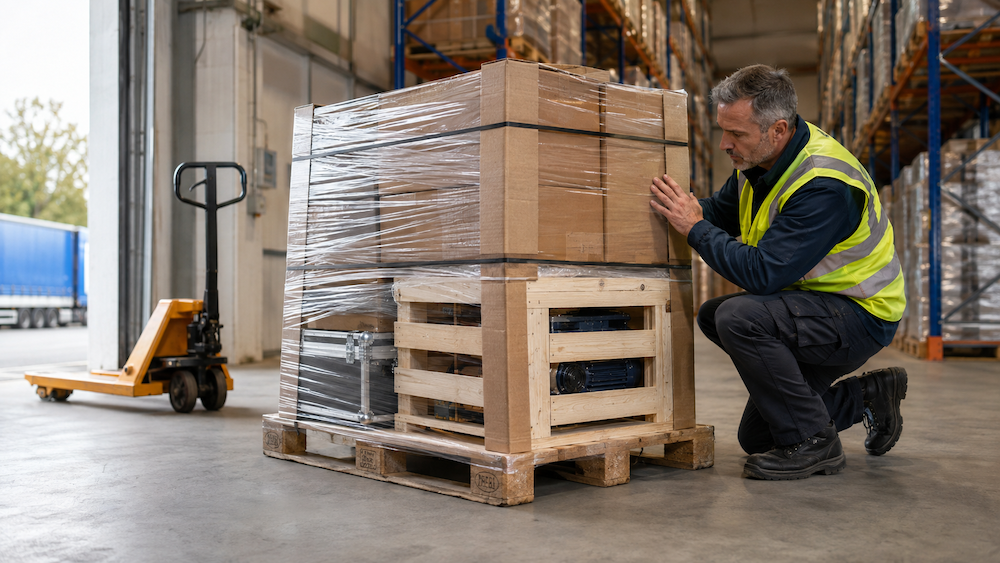
Items should be secured to a suitable pallet, with weight distributed evenly and nothing extending beyond the pallet edges. Strong boxes, protective materials, corner guards, straps and secure wrapping can provide additional protection throughout the journey.

The pallet should also be clearly labelled, and accurate information about its weight and dimensions should be provided when booking the delivery.

At SMA Worldwide, our experienced team can advise you on suitable pallet preparation and help you choose the right delivery service for your goods.

If you need support with a damaged delivery or would like to discuss your pallet transport requirements, visit www.smaworldwide.com or email cs@smaworldwide.com.

0 0 Continue Reading →

What Can and Cannot Be Shipped on a Pallet? A Complete Guide for UK Businesses

Palletised freight is one of the most efficient and widely used methods of transporting goods throughout the UK. Every day, thousands of businesses rely on pallets to move products safely between manufacturers, warehouses, retailers, and customers.

From small businesses sending occasional consignments to large organisations managing nationwide supply chains, pallet delivery provides a reliable, secure, and cost effective way to transport goods.

However, not every item can be shipped on a pallet. While many products are suitable for palletised transport, others require special preparation, additional documentation, or cannot be transported through standard pallet networks at all.

Understanding the difference between restricted items, prohibited items, and standard pallet freight is essential for avoiding delays, protecting your goods, and ensuring compliance with transport regulations.

At SMA Worldwide, we help businesses navigate these requirements every day, providing reliable pallet distribution services across the UK, Europe, and worldwide.

Why Palletised Freight Is So Popular

Pallets have become the backbone of modern logistics because they make transporting goods faster, safer, and more efficient.

Rather than moving individual boxes by hand, goods are securely stacked onto a pallet, wrapped for stability, and handled using forklifts or pallet trucks throughout the supply chain.

This approach offers several important advantages.

Improved Protection

Keeping goods securely on a pallet reduces movement during transport, helping to minimise damage caused by vibration, handling, or shifting loads.

Faster Loading and Unloading

Pallets allow warehouse teams to move large quantities of goods quickly, reducing loading times and improving operational efficiency.

Better Use of Vehicle Space

Pallets can be arranged efficiently inside trailers, helping maximise available transport capacity while reducing shipping costs.

Easier Tracking

Many pallet networks use advanced tracking systems that allow businesses to monitor shipments from collection through to final delivery.

Can Everything Be Shipped on a Pallet?

The simple answer is no.

Although palletised transport is suitable for a huge range of commercial goods, certain items are either restricted or completely prohibited due to safety regulations, legal requirements, or operational limitations.

Knowing which category your goods fall into before booking transport can save valuable time and help prevent unnecessary delays.

What Are Restricted Items?

Restricted items are products that can be transported on a pallet, but only when certain conditions are met.

The exact requirements vary between logistics providers, pallet networks, and destinations, so it is always important to confirm the requirements before arranging collection.

These restrictions are designed to protect drivers, warehouse staff, customers, and the goods themselves throughout the transport process.

Common Examples of Restricted Goods

Engines and Machinery

Industrial machinery, engines, generators, and mechanical equipment are frequently transported on pallets.

However, they often require additional preparation before shipment.

For example, businesses may need to:

  • Drain fuel, oil, and other fluids
  • Secure moving parts
  • Protect sharp edges
  • Strap equipment securely to the pallet
  • Prevent leaks during transport

Correct preparation helps prevent contamination and reduces the risk of damage.

Dangerous Goods

Certain chemicals, paints, aerosols, batteries, adhesives, and industrial products may be accepted for transport under specific conditions.

These shipments often require:

  • Specialist packaging
  • Correct hazard labels
  • Transport documentation
  • Compliance with Dangerous Goods regulations
  • Trained handling procedures

Failure to prepare dangerous goods correctly can result in rejected shipments or legal penalties.

Perishable Goods

Food products, pharmaceuticals, flowers, and other temperature sensitive goods often require specialist transport solutions.

Depending on the product, businesses may need:

  • Refrigerated vehicles
  • Temperature controlled storage
  • Time sensitive delivery schedules
  • Additional packaging to maintain product quality

These measures help ensure products arrive in excellent condition.

Fragile or High Value Goods

Glass products, electronics, artwork, medical equipment, and precision instruments may require enhanced packaging and specialist handling.

Extra protection can include:

  • Corner protectors
  • Protective wrapping
  • Custom crates
  • Shock resistant packaging
  • Additional securing straps

Proper preparation significantly reduces the risk of damage during transit.

Why Restricted Items Require Special Handling

Restricted goods often present additional risks if they are not packaged or secured correctly.

By following the appropriate preparation guidelines, businesses can:

  • Protect valuable products
  • Improve transport safety
  • Reduce insurance claims
  • Avoid shipment delays
  • Meet legal compliance requirements

At SMA Worldwide, our experienced logistics specialists can advise customers on the safest and most appropriate transport solution for restricted goods.

What Are Prohibited Items?

Unlike restricted goods, prohibited items cannot be transported through standard pallet distribution networks.

These products are excluded because they present unacceptable safety, legal, or operational risks.

Attempting to ship prohibited goods without declaring them may result in fines, confiscation, rejected deliveries, or prosecution.

Common Examples of Prohibited Goods

Live Animals

Standard pallet networks are not designed for transporting live animals.

Animal welfare regulations require specialist transport services with appropriate environmental conditions.

Explosives and Combustible Gases

Products such as fireworks, explosives, gas cylinders, and highly combustible materials require specialist hazardous goods transport and cannot travel through normal pallet networks.

Weapons and Ammunition

Firearms, ammunition, explosives, and other controlled weapons are subject to strict legal controls and require specialist authorised transport providers.

Dangerous Waste

Certain hazardous waste materials require licensed waste carriers and must comply with environmental legislation.

These products cannot normally enter commercial pallet distribution systems.

Cash and Negotiable Instruments

Large amounts of cash, bearer bonds, and negotiable financial instruments require secure specialist transport services rather than standard pallet delivery.

Why Do Restrictions Differ Between Logistics Providers?

Many businesses are surprised to discover that one logistics provider may accept an item while another refuses it.

This is perfectly normal.

Although pallet networks follow many of the same transport regulations, each provider establishes its own operational policies based on:

  • Insurance requirements
  • Vehicle capabilities
  • Network infrastructure
  • Warehouse facilities
  • Specialist handling expertise
  • International transport regulations

Some providers offer specialist dangerous goods transport or refrigerated logistics, while others focus exclusively on standard pallet distribution.

For this reason, it is always advisable to discuss unusual or specialist shipments with your logistics provider before arranging collection.

Preparing Goods for Safe Pallet Transport

Even standard commercial goods should be prepared correctly before collection.

Proper pallet preparation reduces the likelihood of damage and helps ensure efficient handling throughout the transport network.

Some best practices include:

  • Choose the correct pallet size.
  • Stack goods evenly across the pallet.
  • Avoid overhanging products.
  • Secure the load with stretch wrap or strapping.
  • Protect fragile edges and corners.
  • Clearly label the shipment.
  • Ensure the pallet remains stable during handling.

Well prepared pallets move through logistics networks more efficiently and are far less likely to experience damage.

A Simple Pallet Preparation Checklist

Before booking your shipment, ask yourself the following questions.

✔ Have you identified whether your goods are standard, restricted, or prohibited?

✔ Do your products require any specialist packaging?

✔ Have all items been securely wrapped and fastened?

✔ Is the pallet stable and evenly loaded?

✔ Have you confirmed any special requirements with your logistics provider?

Taking a few minutes to complete these checks can prevent costly delays later.

Why Choose SMA Worldwide?

At SMA Worldwide, we understand that every shipment is different.

Whether you are transporting standard palletised freight, machinery, retail products, or goods requiring specialist handling, our experienced logistics team provides tailored transport solutions designed around your business.

Our services include:

  • UK pallet distribution
  • Next day pallet delivery
  • Economy pallet services
  • European road freight
  • International freight forwarding
  • Warehousing and fulfilment
  • Customs support
  • Shipment tracking
  • Dedicated customer service

We work with businesses across a wide range of industries, helping customers transport their goods safely, efficiently, and with complete confidence.

Our experienced team is always available to advise on restricted items, specialist freight, and pallet preparation, ensuring your shipment reaches its destination without unnecessary complications.

Final Thoughts

Palletised freight remains one of the safest, fastest, and most cost effective ways to transport commercial goods across the UK and beyond.

While most products can be shipped without issue, understanding the difference between restricted and prohibited goods is essential for ensuring safe transport and regulatory compliance.

Preparing your pallet correctly, checking any special requirements, and working with an experienced logistics provider can help prevent delays, reduce risk, and protect your valuable goods throughout the journey.

At SMA Worldwide, we are committed to making pallet distribution simple, reliable, and stress free. Whether you are sending a single pallet or managing regular nationwide shipments, our expert team is here to help every step of the way.

If you are unsure whether your goods can be transported on a pallet, contact SMA Worldwide today. We will help you find the right solution for your shipment and ensure your freight moves safely and efficiently from collection to delivery.

0 0 Continue Reading →

UK Pallet Sizes Explained: A Complete Guide for Businesse

When it comes to moving goods safely and efficiently, choosing the right pallet is just as important as choosing the right logistics partner. Whether you are transporting products across the UK, shipping internationally, or storing inventory in a warehouse, pallet size plays a significant role in protecting your goods, maximising vehicle capacity, and reducing transportation costs.

Many businesses assume there is one standard UK pallet size. In reality, there is no single pallet size used across every industry. Different sectors, products, and transport networks use different pallet dimensions depending on their operational requirements.

At SMA Worldwide, we provide reliable pallet distribution and freight solutions for businesses of every size. Understanding pallet dimensions helps our customers make informed decisions, avoid unnecessary costs, and ensure their goods arrive safely and on time.

This guide explains the most common UK pallet sizes, why pallet dimensions matter, and how selecting the correct pallet can improve your entire supply chain.

What Is a Pallet?

A pallet is a flat transport platform designed to support goods while they are being moved, stored, or handled. Pallets allow forklifts, pallet trucks, and warehouse equipment to lift and transport multiple products safely and efficiently.

Without pallets, loading and unloading commercial goods would be slower, more labour intensive, and far more susceptible to damage.

Today, pallets are used across almost every industry including manufacturing, retail, automotive, healthcare, food distribution, construction, and e commerce.

Is There a Standard UK Pallet Size?

One of the most common questions businesses ask is whether there is a standard pallet size in the UK.

The answer is no.

Although there is no legally recognised standard pallet size, two pallet dimensions are by far the most commonly used throughout the UK and Europe.

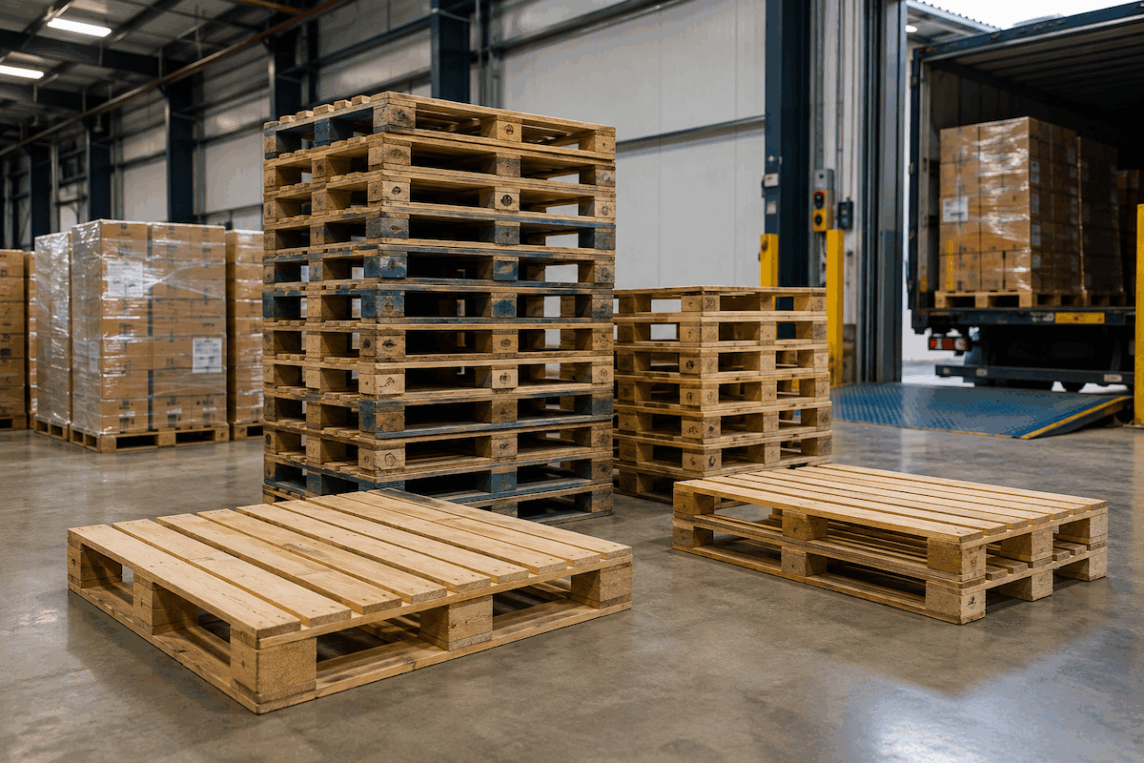
UK Standard Pallet

The UK Standard Pallet measures:

1200 mm x 1000 mm

This size is widely used across UK logistics networks because it offers excellent stability and makes efficient use of vehicle and warehouse space.

Many UK pallet distribution networks are designed around this pallet size, making it a popular choice for domestic deliveries.

Euro Pallet

The Euro Pallet measures:

1200 mm x 800 mm

Originally developed for the European logistics industry, the Euro Pallet is widely recognised across continental Europe and is commonly used for international road freight.

Its dimensions allow for efficient loading inside European trailers and maximise available transport space.

Businesses that regularly trade with European customers often choose Euro Pallets because they are accepted throughout the European logistics network.

Why Does Pallet Size Matter?

Choosing the correct pallet size affects much more than simply fitting your products onto a wooden platform.

It can influence almost every stage of your supply chain, including transportation, warehousing, handling, and overall shipping costs.

Improved Vehicle Space

Correct pallet sizing allows logistics providers to maximise trailer capacity.

When pallets fit together efficiently inside a vehicle, fewer journeys are required, fuel consumption is reduced, and transportation becomes more economical.

Making the best use of available vehicle space also helps reduce environmental impact by lowering emissions.

Better Protection for Goods

Products that fit securely on a correctly sized pallet are less likely to move during transit.

This reduces the risk of:

  • Damaged packaging
  • Broken products
  • Collapsed loads
  • Customer returns

Proper pallet selection is one of the simplest ways to improve delivery quality.

Faster Loading and Unloading

Warehouse teams rely on consistent pallet sizes to move freight quickly.

Using the appropriate pallet dimensions allows forklifts and pallet trucks to operate safely while reducing loading and unloading times.

This helps businesses improve productivity and reduce delays.

Improved Warehouse Storage

Warehouse racking systems are often designed around standard pallet dimensions.

Selecting the correct pallet size allows businesses to maximise storage capacity while maintaining safe stacking practices.

Better use of warehouse space can significantly reduce storage costs over time.

Common UK Pallet Sizes

Although the UK Standard and Euro Pallets are the most widely used, several other pallet sizes are commonly found throughout the logistics industry.

Quarter Pallet

Approximate dimensions:

600 mm x 400 mm

Quarter pallets are frequently used for retail displays and smaller consignments.

Half Pallet

Approximate dimensions:

800 mm x 600 mm

Half pallets are suitable for smaller deliveries where a full pallet would not be practical.

Full UK Pallet

Dimensions:

1200 mm x 1000 mm

Ideal for larger commercial shipments throughout the UK.

Euro Pallet

Dimensions:

1200 mm x 800 mm

Commonly used for European road freight and international logistics.

The right pallet size depends entirely on the dimensions, weight, and type of goods being transported.

How Pallet Size Affects Delivery Costs

Many businesses focus solely on the weight of a shipment when estimating transport costs.

However, pallet dimensions also play an important role.

Oversized pallets may occupy additional trailer space, reducing the number of consignments that can be transported in a single journey.

This may increase transportation costs.

Similarly, poorly loaded pallets can create wasted space inside delivery vehicles, making transport less efficient.

By selecting the correct pallet size and loading it correctly, businesses can often reduce shipping costs while improving operational efficiency.

Choosing the Right Pallet for Your Goods

Every shipment is different.

When selecting a pallet, businesses should consider:

  • Product dimensions
  • Overall weight
  • Load stability
  • Packaging type
  • Destination
  • Method of transport
  • Storage requirements

For example, fragile products may require larger pallets with additional protective packaging, while heavy industrial equipment may require reinforced pallets capable of supporting greater loads.

Choosing the correct pallet from the outset helps prevent delays and protects valuable products throughout the journey.

Pallet Distribution Across the UK

Modern pallet distribution networks allow businesses to send palletised freight quickly and cost effectively to almost any destination in the UK.

Instead of waiting to fill an entire vehicle, multiple customers’ pallets are consolidated into a shared transport network.

This provides:

  • Lower transport costs
  • Faster delivery times
  • Improved tracking
  • Greater flexibility
  • Nationwide coverage

For businesses shipping regularly, pallet distribution offers an efficient and economical alternative to dedicated transport.

International Pallet Shipping

For businesses trading overseas, pallet dimensions become even more important.

Many countries operate different warehouse systems, loading equipment, and transport regulations.

Using internationally recognised pallet sizes, such as the Euro Pallet, can simplify customs handling, improve compatibility with overseas distribution centres, and reduce delays.

At SMA Worldwide, our international freight services help businesses transport palletised goods across Europe and around the world using trusted logistics partners and proven transport solutions.

Why Choose SMA Worldwide for Pallet Deliveries?

At SMA Worldwide, we understand that every shipment is unique.

Whether you need a single pallet delivered locally or regular pallet distribution across the UK and Europe, our experienced logistics team provides reliable, flexible, and cost effective solutions tailored to your business.

Our pallet services include:

  • UK pallet distribution
  • Next day pallet deliveries
  • Economy pallet services
  • European road freight
  • International freight forwarding
  • Warehousing and storage
  • Customs support
  • Shipment tracking
  • Dedicated customer service

As a trusted logistics provider with extensive industry experience, we work closely with businesses across multiple sectors to ensure every pallet reaches its destination safely and efficiently.

Our focus is not simply moving freight.

It is helping businesses improve supply chain performance, reduce transportation costs, and deliver exceptional service to their own customers.

Final Thoughts

Although there is no single standard UK pallet size, understanding the most common pallet dimensions can make a significant difference to your logistics operation.

Choosing the correct pallet improves transport efficiency, protects goods during transit, reduces shipping costs, and helps maximise warehouse space.

Whether you are sending a single pallet or managing thousands of shipments each year, selecting the right pallet is an important part of building a reliable and efficient supply chain.

At SMA Worldwide, we help businesses simplify pallet distribution with dependable logistics solutions across the UK, Europe, and worldwide. From pallet deliveries and collections to complete freight management, our experienced team is committed to keeping your goods moving safely, efficiently, and on schedule.

If you are looking for a trusted logistics partner for your pallet deliveries, contact SMA Worldwide today and discover how our tailored transport solutions can support your business.

0 0 Continue Reading →

Why Low Cost Pallet Shipping May End Up Costing Your Business More Than Expected

When businesses look for pallet shipping solutions, it is often the cheapest options that stand out first. Reducing logistics costs can seem like an easy way to improve margins, especially for growing companies managing tight budgets. However, what appears affordable at the start can often lead to unexpected expenses, service issues, and long term damage to reputation.

The appeal of low cost pallet delivery

Budget pallet delivery services often advertise highly competitive rates that immediately attract attention. Whether you are a small retailer or a manufacturer moving large volumes of stock, saving money on transport can feel like a smart decision. The issue is that lower prices frequently come with compromises that only become clear once problems begin to arise.

Unexpected charges that increase the final bill

One of the most common issues with cheaper pallet shipping is additional costs that are not always obvious upfront. Fuel surcharges, failed delivery fees, waiting time charges, oversized pallet adjustments, and redelivery costs can quickly increase the total price. A shipment that initially appears to cost £50 can easily double once all extras are included. This is why it is essential to understand the full pricing structure before committing to a provider.

Increased risk of damaged goods

Lower cost services often reduce spending on training, equipment, and handling processes. This can lead to pallets being stacked incorrectly or not secured properly during transit, increasing the risk of damage. When goods arrive broken or unsellable, the financial loss extends beyond shipping costs to include replacement products, refunds, and wasted stock. In the UK logistics sector, a notable proportion of palletised freight issues are linked to poor handling practices.

The impact of unreliable delivery times

Delays are another frequent challenge with budget focused pallet carriers. Without strong operational networks or sufficient resources, maintaining consistent delivery schedules becomes difficult. For businesses, this can lead to missed deadlines, disrupted supply chains, unhappy customers, and in some cases lost contracts. Even a short delay can have a significant knock on effect across an entire operation.

Limited insurance protection and higher risk exposure

Some low cost pallet delivery services offer minimal insurance cover or make claims processes difficult and slow. This leaves businesses exposed if goods are lost or damaged in transit. Without proper goods in transit protection, companies may end up absorbing the full financial impact themselves. Choosing a service with clear and comprehensive cover is essential for reducing risk.

Environmental and brand reputation considerations

Cheap pallet shipping providers may also rely on older, less efficient vehicles that produce higher emissions. This can negatively affect a company’s sustainability goals. In addition, repeated delivery issues or damaged goods can harm customer trust and weaken brand reputation over time, making it harder to retain clients and win new business.

Why SMA Worldwide takes a different approach

SMA Worldwide stands apart by focusing on a balance of competitive pricing and reliable service quality. Instead of cutting corners, the company invests in efficient logistics operations, trained staff, and dependable transport networks to ensure goods are handled correctly from collection to delivery. Their pricing remains competitive within the market while still reflecting a strong commitment to service standards.

With transparent costs, comprehensive insurance options, and a focus on consistency, SMA Worldwide provides businesses with confidence that their pallets will arrive safely and on time. This combination of affordability and quality allows companies to manage logistics costs without exposing themselves to unnecessary risk.

Real business impact of choosing wisely

A number of UK businesses have experienced the downside of choosing solely on price, only to switch providers after repeated issues with damage or delays. In many cases, moving to a more reliable service has led to improved customer satisfaction, fewer complaints, and more stable operations.

Making the right decision for long term value

When evaluating pallet shipping providers, it is important to look beyond the headline price and consider the full picture. Key factors include reliability, insurance coverage, handling quality, transparency of pricing, and overall service consistency.

While cheaper options may appear attractive initially, the long term cost of disruptions, damaged goods, and reputational damage often outweighs the short term savings. Choosing a provider like SMA Worldwide ensures businesses benefit from both competitive pricing and dependable service, supporting smoother operations and better long term value.


1 0 Continue Reading →

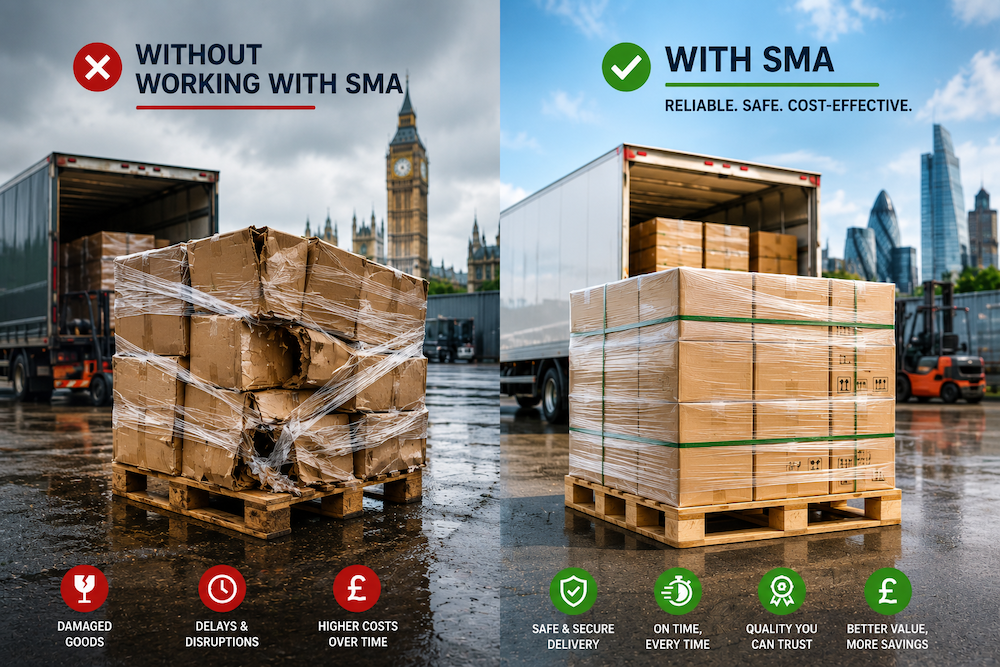
Why Your “Cheap” Pallet Quote Is Costing You a Fortune (And What SMA Does Differently)

If you buy pallet delivery on headline price, you’re not buying transport, you’re buying risk.

On a spreadsheet, the lowest quote looks efficient. In real operations, “cheap” often becomes expensive fast: delays, damage, admin time, customer complaints, and surprise surcharges. The true cost isn’t the booking fee. It’s the disruption cost.

The hidden bill behind budget pallet services

Low-cost pallet carriers typically save money in ways you end up paying for:

  • Late deliveries that stop production lines, miss retail windows, and trigger penalties.
  • Higher damage rates from rushed handling and poor load security.
  • Weak tracking and poor comms, leaving your team chasing updates instead of doing their jobs.
  • “Extra” charges that appear later (tail-lift, timed drops, re-delivery, residential, waiting time).

A few pounds saved on the quote can become hundreds, or thousands, lost in downtime, rework, and service recovery.

Your reputation rides on the pallet

For many customers, delivery is the only physical contact they have with your brand. When a pallet arrives late or damaged, they don’t blame the courier, they blame you.

In B2B, reliability is trust. And trust is revenue.

What “SMA professional pallet logistics” actually means

A serious pallet partner removes uncertainty:

  • Realistic transit commitments (and hitting them consistently)
  • Disciplined handling and secure loading
  • Proactive updates when something changes—before you ask
  • Transparent pricing so finance isn’t ambushed by surcharges
  • Human accountability, not ticket queues and call-centre loops

The goal is simple: you book it, and you can move on—confident it will be delivered properly.

How SMA Worldwide does it differently

SMA Worldwide doesn’t compete to be the cheapest. We compete to be the most dependable.

  • Reliable UK pallet network coverage
  • Clear, upfront pricing—the quote you receive is the price you pay
  • Account-managed service with real people and real ownership
  • Next-day and same-day options offered responsibly—only when we can deliver with certainty

We operate as an extension of your business, protecting your timelines, your stock integrity, and your customer relationships.

Where reliability isn’t optional

If you operate in manufacturing, pharma, food, retail, or industrial supply, reliability is not a “nice to have.” It’s operational stability. Lean inventory and tight delivery windows mean one failed pallet can trigger a chain reaction of cost and chaos.

Price vs value is a risk decision

A cheap provider effectively asks you to absorb the risk of delay, damage, and poor communication. A premium provider invests in systems, people, and process to remove that risk.

When you measure total landed cost, not just the freight line, reliability is the lowest-cost strategy.

Conclusion

The cheapest pallet quote often costs more in delays, damage, admin, and lost trust. Real savings come from a stable supply chain and predictable delivery performance.

If you want pallet distribution that protects your operations, not threatens them, talk to SMA Worldwide.

📞 0192 329 0490
✉️ cs@smaworldwide.com
🌐 www.smaworldwide.com


0 0 Continue Reading →

SMA Pallets Ltd breaks new ground with pallet industry ETA technology first

UK-wide road haulage firm SMA Pallets Ltd is the first company in Hertfordshire to provide its customers with an accurate two-hour time delivery window for palletised freight.

The new service is thanks to innovative, game changing technology developed by Palletways, Europe’s largest and fastest growing palletised freight network. SMA Pallets Ltd is one of 100+ independent transport companies who, as part of the Palletways network, are uniquely positioned to offer this service.

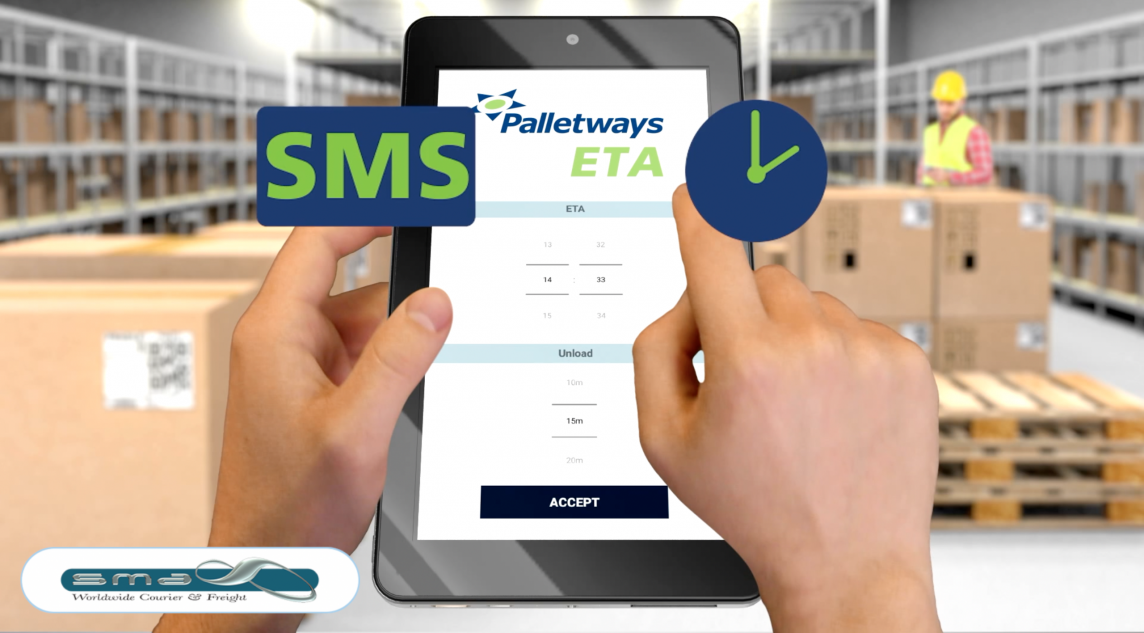
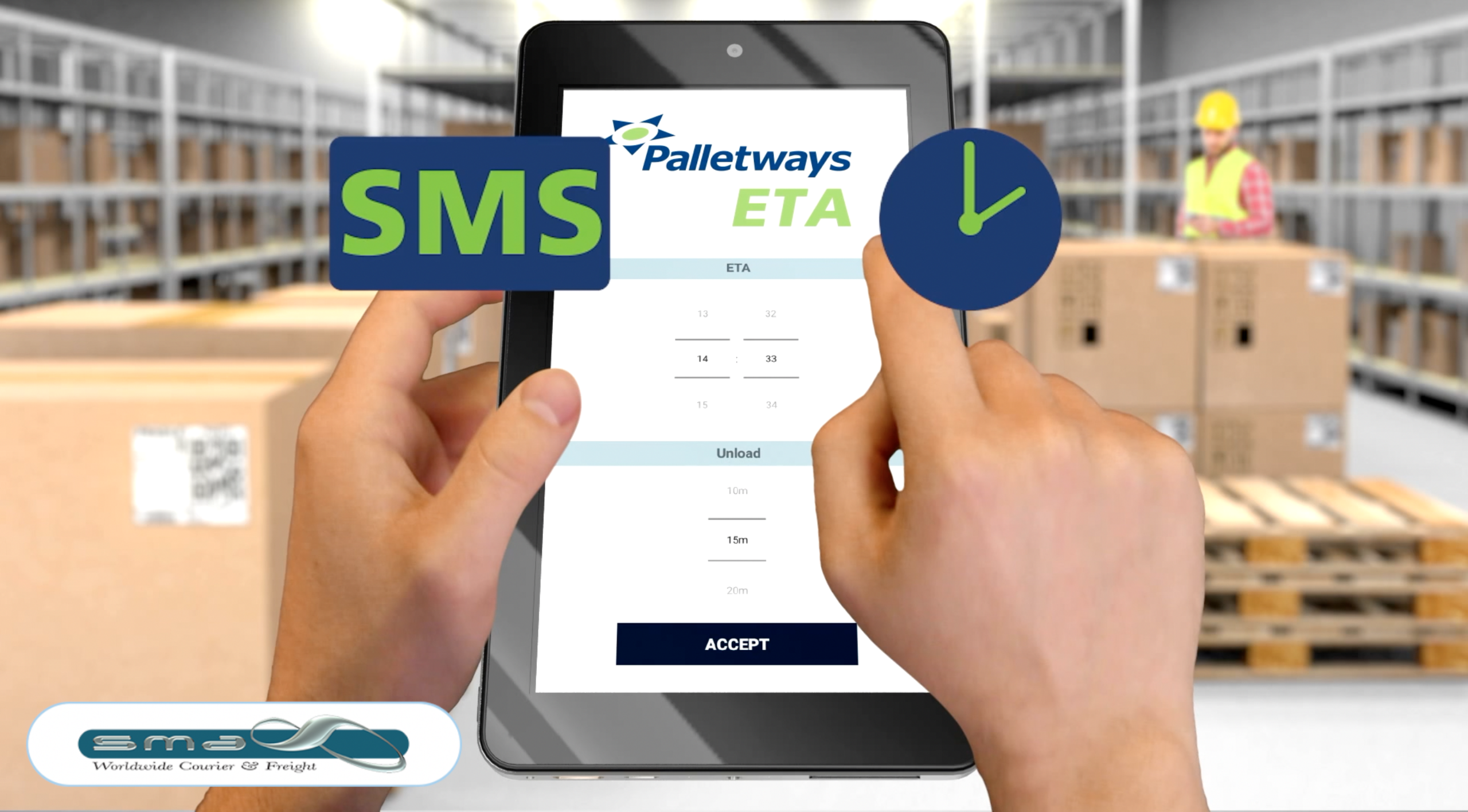
Through the ETA system, SMA Pallets will also be able to provide SMS and email notifications to both their customers and consumers. Information is provided to track and trace goods and notify the two-hour window within which the pallet will be delivered.

Alex Stewart, Operations Supervisor at SMA Pallets said: “The number one on our customers’ wish list is to receive two-hour delivery windows together with electronic notifications via mobile phone and email. Our pallet information system is now on a par with only the best parcel operators. No other palletised freight network or operator in the UK has this system.

“Working with Palletways, we’re part of the first pallet network in the UK to offer a comprehensive ETA system. In turn, this provides our customers an advantage over their competitors and a greater ability to manage their logistics and control costs. It’s a win-win on all sides.”

All drivers in the Palletways UK network of over 100 depots are trained to use the ETA App that will enable them to alter routes and delivery times according to traffic conditions and unforeseen circumstances, such as road traffic accidents. This technology offers an added level of certainty to the two-hour delivery windows.

Dave Walmsley, Palletways UK Managing Director, said: “We have been working around the clock for twelve months to make sure that our game changing ETA system is ready to improve the offer of our members, like SMA Pallets, to both the customers of today and the future.

“In addition to our award-winning archway scanning technology, Digital Information Hub and five regional hub depots, our road haulage members have access to cutting-edge tools which provide unrivalled customer service excellence for businesses across the UK needing a pallet freight delivery service.”

SMA Pallets is one of around 400 hundred members of Palletways’ European distribution network, all independent transport operators which share their resources to deliver small consignments of palletised freight to market more efficiently than before.

Notes to Editors

ETA in action – how does the system work?

Step One: The Palletways customer books a consignment;

Step Two: Consignment is collected and transported via a Palletways Hub to the delivery depot. At each stage of the process, delivery notifications are available;

Step three: Upon leaving the delivery depot the notification is sent to the consumer via SMS/ email advising the two-hour delivery window.

About Palletways

Key Palletways stats:

  • Palletways was founded in the UK in 1994
  • In total Palletways handles up to 40,000 pallets daily, including more than 23,000 pallets a day in the UK, 10,000 in Italy and 3,000 in Iberia.
  • One in every four pallets handled by palletised freight networks in the UK is distributed by Palletways
  • During a typical operating day Palletways handles more than one pallet every second.


The Palletways Group:

  • Palletways provides an express delivery solution for consignments of palletised freight, and is the leading dedicated pallet network in Europe. The Palletways network operates more depots and handles greater volumes of pallets than any other similar network.
  • Over the past 23 years Palletways has developed a strategic network of more than 400 depots and 17 hubs. It now provides collection and distribution services across 20 European countries: Austria, Belgium, Bulgaria, Czech Republic, Denmark, Estonia, France, Germany, Italy, Latvia, Lithuania, Luxembourg, Netherlands, Poland, Portugal, Republic of Ireland, Romania, Spain, Slovakia and the United Kingdom.
  • In the UK Palletways has a national hub in Lichfield, Staffordshire, and regional hubs in London, Leeds, Edinburgh and Bristol. It offers a range of express distribution services for consignments of palletised freight across the UK. These include next day, next day AM, timed delivery options, and Economy 2/3 day.
  • The Netherlands, Belgium, Luxembourg and Denmark are served via a hub operation in Nijmegen.
  • In Germany the Palletways hub operation is in Knullwald (near Kassel).
  • In Italy the national hub is in Bologna with regional hubs in Naples and Milan.
  • The Iberian national hub, serving Spain and Portugal, is in Madrid with regional hubs in Zaragoza and Jaen.
  • Collection and distribution services in France are provided via a subcontracted operation, with three hubs in Paris, Lyon and Montpellier.
  • Palletways Europe GmbH, based in Switzerland, was set up in 2006 to develop pan-European collection and distribution services
  • Palletways Poland is served by a national hub in Łódź.
  • Supporting all the networks is Palletways award winning technology including its unique archway scanning system which captures a photographic image of every pallet which passes through its hubs combined with automated scanning to provide seamless track and trace. Palletways’ Digital Information Hub, a custom developed communications platform provides real time data linking all operations across Europe monitoring all consignments providing total visibility and security of every pallet throughout the whole distribution process to all European destinations.
  • For more information, visit: smaworldwide.com


0 Continue Reading →

Latest of many awards

SMA Pallets Ltd is delighted to announce that Palletways won the Chartered Institute of Logistics and Transport Award for Operational Excellence 2015 which was presented at an awards dinner at the Lancaster London hotel in October, in the presence of the Princess Royal, the CILT patron. Our entry was based on our Vision 20:20 strategy, covering all aspects of our operation.


Our success in these awards reflects positively on the company and reinforces our market leading position. It endorses the decision of our existing customers to use us, attracts those who don’t yet use us and enhances our reputation with all stakeholders. We are proud to share the news of our success with our clients.


“As a Platinum Member of Palletways, SMA Pallets Ltd’s KPIs contributed strongly to secure such a prestigious award.” said Selva Pardeep, Operations Manager at SMA Pallets Ltd.


1 Continue Reading →

The Future Growth Plan

Palletways delivers to 20 European destinations, which is more than any other pallet distributor, and the network consists of 400 depots across Europe of which more than 100 are in the UK.

The Palletways Group’s plans for growth are linked to key developments it has unveiled, which include:

  • A new central hub in Lichfield, which will be fully operational with immediate effect after a successful pilot phase. Situated just 500m from its existing central hub facility, the new facility will increase capacity by 8,000 pallets per day and enable faster turnaround of customers’ goods for onward distribution to their delivery destinations. The site comprises 11,500 square metres of warehouse and sortation space, 750 square metres of office space and a trailer park with capacity for 300 trailers.
  • The extension of its regional operations in London, Oxford and Scotland increasing their capacity by 40%.
  • Within the last 18 months the company has already established a new regional hub in Milan for Northern Italy, a brand new, larger hub in Nijmegen, Holland plus a new Palletways Fulfilment warehouse in the same location to service Benelux and the Ruhr Valley, an extension of their Iberian hub in Alcala de Henares, Madrid plus an extension of their Italian hub in Bologna, Italy.
  • New planned hub facilities in central Germany (Homberg), Southern France (Lyon and Montpelier) and Eastern Europe (location tbc) within the next few months.


  • The extension of the group’s distribution network into the Nordic countries. This will further build on the company’s geographical footprint, following recent expansion into Poland and the Baltic countries of Estonia, Latvia and Lithuania in June and Bulgaria and Romania in August.
  • The continued roll-out of the group’s award-winning Digital Information Hub across its networks in Europe. The web-based platform, which was launched in the UK last year, optimises the use of real time data to provide greater operational efficiencies by reducing downtime on telephone calls, increasing vehicle utilisation and enhancing traffic management. It also takes customer service to even higher levels by speeding up the resolution of any distribution issues to ensure deliveries on time, providing real time visibility of consignments and presenting new business opportunities for users of the company’s services based on their current distribution profiles.
  • The introduction of a new online booking facility for customers.

These developments follow the group’s best year to date for volumes handled across its European network, with a current average of 33,000 pallets being delivered every day. This represents an increase of some 12% compared to the previous 12 months.

This year the Palletways group will process more than 8 million pallets with daily averages of 36,000 pallets and seasonal peaks exceeding 40,000 pallets. As the largest and most mature business the UK will handle 60% of these volumes.

“This is an exciting time for our network as we continue to expand, reinforcing our market leadership, our reputation for service excellence and our pan-European capabilities in support our customers’ growth ambitions,” said Luis Zubialde, Managing Director at Palletways UK.

“Our growth into new markets has been supported by our significant and continuous investment in new infrastructure in the UK and abroad and the development of improved communications technology to extend the reach of the business and drive efficiency and performance. We will continue to build on these solid foundations over the coming 12 months.”

“We are already the market leader in terms of both service and volume, our European activity now represents 40% of our overall volumes which is more than the total UK and European volume of any other competitor in the UK. This confirms our group strategy “

Palletways’ Operations Director Mike Harrison added: “Our investment in new infrastructure is a core component of our growth plans.

“The introduction of the new Terminal 2 in Lichfield, together with plans for new facilities in Europe, will provide significantly more capacity and business opportunities for our network.

The seamless introduction of this new facility has increased our members’ efficiency by extending their window of operational opportunity through later collection times and earlier departures.

“As we expand, our investment in these core components will play an essential part in ensuring that we continue to deliver our high standards of service excellence for all our customers.”

4 Continue Reading →